Tuesday, 24 February 2015

Romantic clichés

It's not easy to write a good romance novel.

If there is any genre which tends to drift into cliche, not to mention emotionally unhealthy fantasy territory, it's the romance.  Blame it on fairy tales and Walt Disney films . . . which inspire most of our earliest ideas about romantic love, and then give us such limited plot points and potential outcomes to imagine.  Either you are a heroine that needs to be saved (Snow White, Cinderella, Sleeping Beauty, Rapunzel), or more rarely, a heroine who wants to do the saving (Ariel, Beauty).  Either way, the story ends with a "happily ever after" and is squarely aimed at a female reader.


Hats off, then, to Daniel Handler -- who did his level best to subvert romantic clichés
in his YA novel Why We Broke Up.  Never mind the happy ending; Handler dispenses with that notion from the very title of the book.  He starts with the aftermath of a break-up of a couple of unlikely love birds, and then works his way back to the less than auspicious beginning of their relationship. 

Min is the cinema-obsessed girl with the simpatico best boy friend who seems like he might be gay, but isn't.  (Instead, he is secretly in love with her.  Yes, a cliché . . . but a knowing one.)  They are the "arty" not-quite-cool kids in school, several rungs below the athlete-and cheerleader apotheosis in the social hierarchy.  When Al (best friend) has a Bitter Sixteen birthday party, basketball god Ed Slaterton and his sidekicks crash it with all the noblesse oblige of the truly popular.  Ed flirts with Min, Min succumbs to the flattery of his attention, and next thing we know she is dragging him to an art-house film.  This is the opposites-attract kind of romance; no one really expects it to work out, and no one is really surprised when it doesn't.  Ed seems to have potential to be more than he appears to be, and Min starts falling for this possibility.  But then he disappoints; he turns out to be exactly the "player" Min suspected him to be all along; and we are all unaccountably disappointed.

Typically, in a romance, there are a variety of conflicts and misunderstandings which keep the happy couple unhappy . . . sometimes until the very tip-end of the denouement.  But the reader knows, because this is a convention, that everything will work out in the end.  So Daniel Handler writes an un-romance, an anti-romance, but with plenty of fair warning to the reader.   Read it for Daniel's clever writing and Kalman's appealing illustrations . . . but don't read it for the emotional satisfaction of a happy ending.  

Another terrific YA writer who plays around with romantic cliches is Stephanie Perkins.  In her novel Lola and the Boy Next Door, the second in a loosely connected trilogy, Perkins gives a big wink to a trite romantic convention:  that your true love might just be the boy you've known all your life.


At the beginning of the story, our heroine Lola is in love with her first proper boyfriend, who just happens to be quite a bit more experienced than Lola (in every sense of the word).  Her two Dads, (the story is set in bohemian San Francisco), don't like Max very much, but they do invite him to Sunday brunch every week -- if only to grill him.  Everything is pretty groovy . . . until, enter stage left . . . Lola's childhood crush moves back into the house next door.  Although there is some historical heartbreak and misunderstanding to clear up, it is pretty clear that Lola is going to have to make a tough choice.  Both Max (dangerous and exciting) and Cricket (nerdy but adorable) are recognizable types, but they are too well-drawn to be described as cliches.  Yes, Perkins sets up a classic love triangle, but the originality and charm is definitely in the detail.  Cricket Bell may not be the most obvious Prince Charming, but he is one of the most appealing romantic heroes I've ever encountered in a YA romance, and my 17 year-old daughter definitely concurred in this opinion.

If you are looking for the emotional satisfaction of a happy ending, do give this wonderful novel -- and indeed, the entire series -- a read.  Neither the heroes nor the heroines are passive love objects, and they all experience realistic learning curves before getting to experience "true love". 

For other romances, anti-romances -- and a few books about complicated relationships -- see TRAC's February Book List

Wednesday, 4 February 2015

I Was Here

Any passionate reader will agree that stories can provide a specific kind of comfort and solace.  Most readers will also admit to identifying with a protagonist's struggle -- maybe not always, and not all struggles -- but certainly a majority of us have inserted ourselves into a book on occasion.  The idea of "bibliotherapy" is slightly more complicated, though.  It is one thing to just stumble upon the right book at the right time, but it is quite another for an educator or parent to "prescribe" a specific problem novel to an adolescent struggling with that selfsame problem.  It can feel too intrusive, almost an invasion of privacy.  There is also the very human tendency to think that our own problems are unique, and cannot or should not be reduced to the universality of fiction.

I have found some success in approaching the dilemma of book recommendations in a more sidelong manner.  A young friend of mine, age 20, suffers from depression and borderline personality disorder.  Her multiple suicide attempts have required extended periods of hospitalization.  When she is well enough, reading is a great comfort to her -- and the perfect antidote to empty hours and the lack of intellectual stimulation, not to mention the problem of being "in one's own head" too much.  Last summer she fell in love with a book that I had enthusiastically recommended:  Just One Day, by Gayle Forman.  Although my friend's struggles were not identical to those of Allyson, the protagonist of the book, there was definitely an emotional resonance.  When Allyson experiences an emotionally cataclysmic event, her carefully ordered life falls apart for some time; and then she begins to put it back together again.  The story is about a specific transitional moment -- in this case, the first year of university -- but it deals with a number of transitions common to all adolescents:  separating out from parents, making independent decisions, taking risks, suffering rejection and exploring new territory.

I Was Here is Gayle Forman's fifth novel for the Young Adult audience, and so far all of her work has been aimed at the upper end of this age group.  She writes about adolescents transitioning into adulthood:  going off to college, losing their parents, having sexual experiences and learning how to support themselves, both emotionally and financially.  Forman consistently deals with emotionally tough themes, but never more so than in I Was Here, which deals with adolescent suicide.

The book begins with a suicide letter, sent by email on a time delay from Meg to Cody, her best friend.  Like many survivors of a loved one's suicide, Cody is stricken by guilt.  Why hadn't she seen how unhappy Meg was?  Why hadn't she done something to help?  Cody's search for answers leads her to another troubling possibility:  Did someone actually encourage Meg to kill herself?

Forman withholds critical information to the plot for a long time, and perhaps longer than necessary.  On one hand, this gives the story a mystery/thriller element that some teens may find exciting.  There is also a highly conflicted romance between Cody, and an off/on boyfriend of Meg's who is also suffering guilt in the wake of her death.  On the other hand, as an adult reader I felt some anxiety about how she was treating this highly sensitive material.  In the end, Forman brings the story to a close which feels appropriate for both the characters and the reader.  Even more importantly, her Afterword makes clear how strong the link between depression and suicide is -- and how getting the appropriate help can make the difference, but does not do so in all cases.

Understandably, this is a painful book to read.  Forman sets the novel in an economically depressed area of the Northwest, described by Cody as Shitburg.  Cody has been raised by a single mother, whose parenting style has been largely negligent.  Cody cleans houses for a living because she hasn't got her act together, or saved enough money, to go to college.  As the story progresses, and at times Cody begins to identify uncomfortably with Meg, several voices begin to make the point that being "depressed" and sad/angry/frustrated is not the same as being clinically depressed.  This is an important distinction, and the novel gradually but definitely leads the reader to make it for him or herself.  Having said that, I would feel somewhat uncomfortable "prescribing" this book to anyone who is suffering from clinical depression.  It might well educate those young adult readers who are fortunate enough to not suffer from it, though.


Sunday, 25 January 2015

Where have all the parents gone?

Over the past month, I've been reading my way through UKLA's Longlist of fiction for 12-16+ readers.  The selection of books I chose to read was fairly random, but mostly based on their availability from either my local library or bookshop.  The order in which I read the books was also random, but after the fifth title I couldn't help but notice a single persistent theme:  missing parents.

In some of the stories, the parents were merely absent from the scene:  rehab and extramarital affairs (Why We Took the Car) or business travel/personal projects (After Iris) or general unfitness as a parent (Close Your Pretty Eyes).  In other books, the death of a parent was central to the plot, most notably in Counting by 7s and The Year of the Rat.  Both of the historical novels (Ghost Hawk and Buffalo Riders) featured adolescent protagonists who were orphans.

Certainly some children and adolescents will have the bad fortune to lose a parent (or in rarer cases, both parents) as they are growing up, but it seems unlikely that all of these missing parents are representative of real-life statistics.  So why the persistence of the theme?  It certainly isn't a new phenomenon.  In a Publisher's Weekly essay titled "The Ol' Dead Dad Syndrome", from Sept 20, 2010, author Leila Sales discusses the noticeable lack of parents in dystopian fiction.
Dead parents are so much a part of middle-grade and teen fiction at this point, it's not even the "in" thing. It's not "au courant" or "en vogue." It's just an accepted fact: kids in books are parentless.
But interestingly, none of the titles I've referred to are dystopias.  And it's not as if the teenagers are de facto orphans, either.  Orphans have, of course, always been a staple of children's and YA fiction for the most obvious of reasons:  if you get the parents out of the way, the young protagonist can really get on with the business of having adventures.  After all, grown-ups can be boring and they have a tendency to say NO.  Having fun, getting into danger, being independent, resolving one's own problems:  think of it as the safest form of wish-fulfilment, think of it as convenient for both author and subject.  Either way, orphans can exist in a fictional realm of possibility -- with actual grief and loss taking place (or more likely, not taking place) off the pages of the story.

Leila Sales also cites the "sympathy" factor as a reason for authors to orphan their main characters. She refers to one of the most famous orphans of children's literature:  Mary Lennox in The Secret Garden.  The plot of The Secret Garden could be described as the following:  Orphan creates a garden, and in the process transforms herself and several dysfunctional others into a happy, healthy family.  Interestingly, the plot of Counting by 7s could be described in exactly the same way.  Mary Lennox is unsympathetic because she is unhappy and unfriendly, sickly and sour;  Willow Chance, from Counting by 7s, is unsympathetic because she is a highly gifted child (and a bit of a know-it-all) who doesn't have a clue about how to fit into her peer group.  At the very beginning of the book, Willow's sweet, loving parents must be dispatched so that she can finally emerge from a state of self-containment and isolation.  


The emphasis in Counting by 7s is not so much on losing a family, but rather, on how new families are formed.  In many ways, this is a really contemporary view on families.  For instance, every single important character is either an immigrant or of mixed-race (or both).  None of the characters particularly belong, either to their community or to any specific family.  Willow describes herself as not fitting into "an easily identifiable ethnic category" (p. 11).  This is a world in which people are connected, not by blood, but choice -- or need.    There are lots of lonely, alienated people and they all function much better as an interdependent organism.  When Willow and her new family transform the sterile, ugly environment of "Gardens of Glenwood" into a thriving, beautiful garden for real, it is also a metaphor for their emotional lives.


For all of the missing parents, there is something unique about The Year of the Rat -- a debut novel by Clare Furniss -- merely for the reason that the story is entirely about the real experience of losing a parent.  This book is not about a teenager having adventures-without-parents, and it's also not about the 'romance' or emotional intensity of dying.  Rather, it's about 16 year-old Pearl trying to cope with life after the death of her mother in childbirth.  It's about making one's way out of a deep grief, and learning how to cope with a loss of something huge and irreplaceable.  The book manages to capture the stages of grieving -- what that is actually like/how that feels -- more believably than any other YA book that comes to my mind.  Although this heavy theme is somewhat lightened by secondary characters and the sympathetic, wise-cracking spirit of the dead mother, it is still an emotionally intense story.  Interestingly, for all of the dead and missing parents, this is the only book in which the death of a parent actually drives the plot.

For more information about these books, please visit
TRAC Top Ten UKLA Longlist


Saturday, 10 January 2015

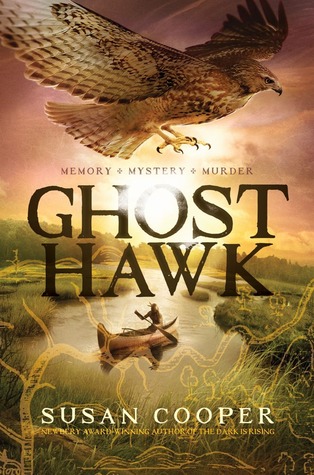
Ghost Hawk


Are you stuck indoors, trying to avoid the whiplash of wind and onslaught of icy rain or even snow?
Well, here is a good tale for a cold winter's day.

In the opening chapters of this historical novel, Little Hawk -- an 11 year old boy of the Pokanoket tribe -- has ventured into the winter woods for his "proving" ceremony.

When my proving time came, snow lay on the round roofs of the homes in our village, and the ground and all the forest trees were white.  You were truly a man if you could manage to survive alone, out in the forest, in the darkest part of the year, when most living things on the earth die or sleep, and the cold rules us all.  (p. 10)

Author Susan Cooper makes an interesting choice in the lyrical, very otherworldly beginning to her story.  Survival, of a single young boy, is reduced to the simplest level.  Can he find enough shelter to avoid freezing?  Can he find enough food to avoid starving?  Can he co-exist with, or if that is not possible, prevail against the other creatures who are also struggling for their survival?

The story begins with an individual -- and then gradually opens up to a wider society:  from Little Hawk's village to a wider web of that same tribe, and finally to the commerce and fraught co-existence between the various native tribes of New England (in modern-day Massachusetts and Rhode Island) and the English immigrants.  The story gradually progresses from physical survival to the considerably vexed problem of cultural survival, using the braided lives of Little Hawk and an English boy called John Wakeley to tell the tale.  The author uses elements of mystery, suspense and surprise to enliven this story of friendship existing within cultural conflict.

Set in the earliest period of colonial America, the book spans the first few decades of the establishment of the Plymouth Colony (1620-40s).  There is a sense of slow time versus fast time. Slow time is represented by Little Hawk's tomahawk, which his father made by binding a stone blade between the joined branches of a bitternut hickory tree and then waiting for a decade for the two to fuse inextricably together.  Fast time is the same period of time, in which English steel and barrels and disease and land deals are rapidly unravelling the long unchanging existence of the native tribes. The lifespan of Massasoit (also referred to as Sachem and Yellow Feather) also illustrates the swift decline of the Indians in their own native land.  From being the saviour of the first "Pilgrims", a friendship which inspired the American holiday of Thanksgiving, to a pragmatic negotiator of peace, Massasoit's accomplishments in diplomacy end with his death.  His own son, whose name is Anglicized to King Philip, is remembered for the devastating war which puts the full stop to an experiment in cultural co-existence.

I approached this novel with some misgivings, unsure that a rehashing of the old "Pilgrims and Indians" tale would be of much interest.  But as breaking news of jihad in Paris dominates the news, it is really worth examining violence and extremism -- especially as they are promoted under a mantle of religion.  Sometimes it is easier to examine these ideas from a historical remove.  The experiences of John Wakeley, first in the Plymouth Colony and later in the far more tolerant Rhode Island community founded by Roger Williams, underscore exactly why the separation of church and state was (and continues to be) necessary in the United States.    Religious extremism and the cultural racism of "us against them" tend to go hand in hand; against this backdrop, the story points towards another more promising path.  This novel has been criticized for not fulfilling, in a narrative sense, the promise of friendship, but sadly that is historically accurate.


Note:  You might also enjoy Marcus Sedgwick's review of Ghost Hawk in The Guardian.
Ghost Hawk has been short-listed for the 2014 Carnegie Medal.

Tuesday, 6 January 2015

Top Ten Reads from 2014

These are the books that I could not get out of my head. 
These are the books that I found myself recommending over and over again.
Most of these titles were published in 2013-14, but a few of them were just new to me.  
All of them are well-worth a read.


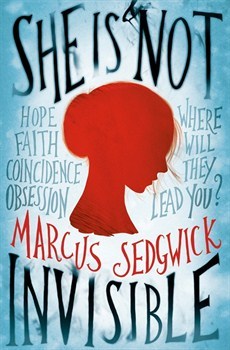
 She is Not Invisible, by Marcus Sedgwick

One hot day in August, 16 year old Laureth and her little brother Benjamin board a plane for New York City.  They are on a quest to find their father, who has gone missing; after receiving a blackmailing email, Laureth suspects foul play. Two problems:  No one knows where they are going, and Laureth is blind.   Both mystery and thriller, this unusual novel explores the idea of coincidence.    Is it a matter of mathematical probability, or something more significant?  Let the reader decide.


 We Were Liars, by E. Lockhart

The beautiful Sinclair family have their very own island off the coast of Massachusetts.  Every summer they go there to swim, play games and mess about in boats with their cousins -- until the fifteenth summer, when something unimaginable and tragic happens.   Even as the reader is led to an understanding of the tragedy, along with the amnesiac narrator, it still manages to be surprising and completely devastating.  Beautifully written and impossible to put down.


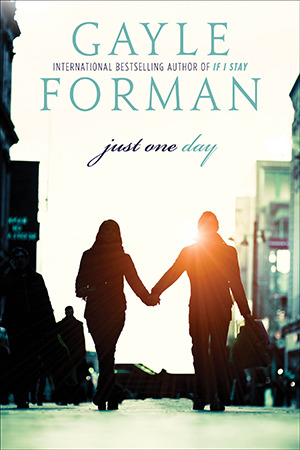
 Just One Day, by Gayle Forman

 Allyson didn’t really expect a summer trip to Europe would change her life, but when she makes an impetuous decision to visit Paris with a near stranger there are far-reaching consequences.  Much more than a summer romance novel, this engaging story explores how one crucial day can spin a life into a whole new direction.  The coming-of-age theme gets an emotionally complex treatment in this novel for older YA readers.


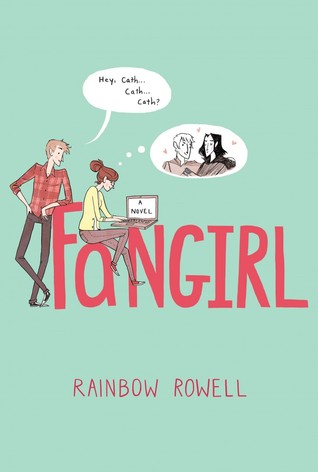
 Fangirl, by Rainbow Rowell

18 year old Cath:  first year university student, twin, and fan fiction writer with reclusive tendencies.  Cath has family problems and love interest problems, and spends way too much time in a Harry Potteresque fantasy world, but she also possesses a dry sense of humour and a strong sense of self.   Fangirl describes the seductive power of a fictional world, and it creates that, too.


 Liar and Spy, by Rebecca Stead

This memorable book about friendship will appeal to younger readers, or anyone who appreciates excellent writing and a well-told story.   When the book begins, main character Georges is having a hard time.  His family has had to move, his mother is never at home and he is being bullied at school.   Georges’ only potential new friend is a home-schooled spy called Safer – who never leaves their apartment building.   Full of humour and quirky details, this book will surprise and thoroughly engage its readers.


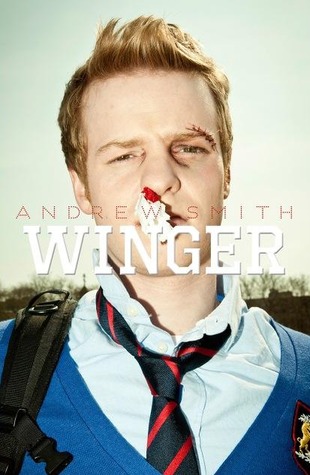
Winger, by Andrew Smith

Ryan Dean West:  gifted student, excellent athlete, lover of women, genius cartoonist. 
Ryan Dean West:  14 year old self-described “loser.” Hyperactive and prone to social gaffes.
Ryan Dean West:  two years younger than everyone else, but looking for a level playing field.
RDW punches above his weight and so does this humorous novel, with unexpected serious and touching moments.  The quantity of excellent cartoons edges this novel into graphic territory.


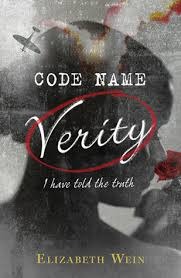
 Code Name Verity, by Elizabeth Wein

 Two young British women, both of them trapped in Nazi-occupied France in 1943.  Two friends, one a pilot and the other a spy.  Nazi interrogation will force one girl to give up her secrets, but how much of her story is truth – and how much lies?  This compelling story of friendship and bravery combines a wealth of historical research with a thrilling plot.


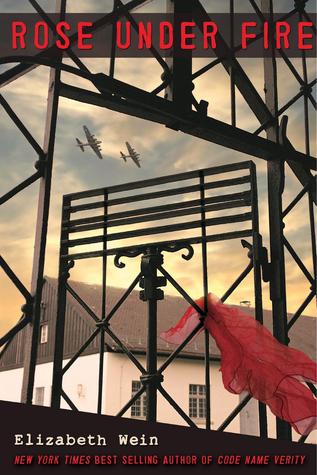
 Rose Under Fire, by Elizabeth Wein

This gripping sequel to Code Name Verity tells the story of a young American pilot named Rose Justice.  When a risky flight manoeuvre results in Rose’s capture by the Germans, she finds herself in Ravensbrück– one of the notorious Nazi concentration camps. There, Rose is befriended by a group of political prisoners who have survived unimaginable atrocities.  Together, they will use the power of stories, poetry and friendship to overcome the horror and despair of their situation.


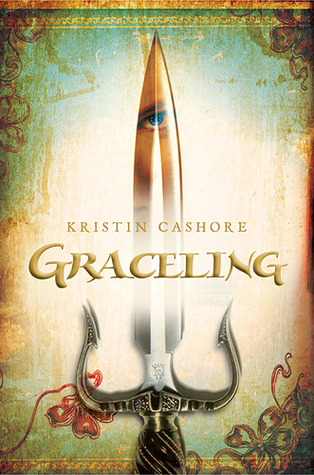
Graceling, by Kristin Cashore

Lady Katsa is the best fighter in the realm – and the tool of her uncle, a cruel and corrupt king.  Graced by extraordinary skills, Katsa rejects her role of royal thug and dedicates her protection to a vulnerable young princess instead.  This original fantasy, the first in a trilogy, will be particularly appreciated by readers seeking strong female characters.  Author Kristin Cashore skilfully blends romance and adventure in this emotionally satisfying novel. 


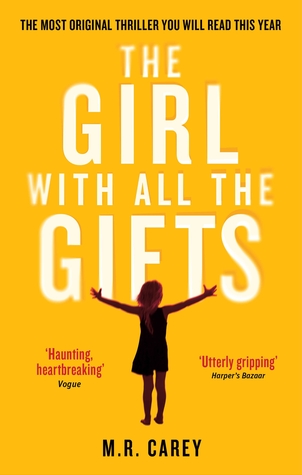
The Girl with all the Gifts, by M.R. Carey

Melanie is the smartest girl in the class, but she doesn’t understand why she and her fellow students are kept locked in their wheelchairs all the time.  She doesn’t know why they never go out into the world they read about in books.  Dr. Caldwell sees Melanie as the key to saving what is left of a ruined world, but she expects to find her truths on an operating table – and Melanie has other ideas.  This post-apocalyptic thriller was written for adults, but mature teen readers will find it an exciting, engrossing read.


TRAC invites you to visit us at www.tracbook.com
Please let us know what you think of our list via Twitter @trac_book
Email questions or feedback to info@tracbook.com


Tuesday, 11 November 2014

Remembrance Day

This year's Remembrance Day commemoration has focused on the 100th year anniversary of the advent of World War I -- represented, so poignantly, in the Blood Swept Lands and Seas of Red art installation currently seen at the Tower of London.   November 11 marks the day that the last of 888,246 ceramic poppies -- each representing a British or colonial death in the "War to End All Wars" -- is laid to rest.

I have read a number of novels set in World War I, but for me the classic and still indispensable text is All Quiet on the Western Front by Erich Maria Remarque.  Published in 1929, it is still surprisingly accessible and readable.  For the British or American reader, there is always that shock of perspective.  Rather than despise the narrator, we sympathise and suffer with him.  We root for him; we hope he can outwit the many forces which want to crush him.  There is no faceless enemy, no German "Hun", but only a young Paul Bäumer -- who was sold a jingoistic bill of goods, just like every other young man of his generation.  Although the novel describes a war dominated by trench warfare, the conditions of war seem applicable to almost any armed conflict.   Rather than excitement and glory, Paul experiences boredom interspersed with intervals of sharp fear.  Scavenging for food and cigarettes is his and every other soldier's main concern, and comradeship their only consolation.  Paul fears that the experience of war has left him fit for no other purpose and the random nature of survival alienates him from even his closest comrades.  In one sense, that is the irony of the novel.  War has often been criticised for being a soulless machine, but in this war story,  the individual's experience is the only important thing.

Although the number of 888,246 is huge and shocking, it seems worth noting that German casualties were more than twice that number.    The total casualties of the war are believed to be larger than 10 million human lives.  We honour those sacrifices even as we acknowledge the pointlessness of so many of them.   As the infographic at poppyfield.org shows, the "Great War" wasn't the war to end all wars . . . not even close.

Friday, 31 October 2014

Halloween Horror

Most of us have a reading comfort zone -- and for me, the horror genre is definitely at the margins.  I simply do not thrill to the sensation of being scared.  I do not dwell on death; I do not desire a good haunting.  It was a challenge, then, to read a long list of horror novels in October; hopefully, like any decent ghost, I've risen to it.

Lots of readers DO like to be frightened -- whether by real monsters, or imaginary ones -- and the horror genre has enduring appeal for many teenagers.   Stephen King has been widely quoted as saying that horror "allows us to safely vent our uncivilized emotions."  Since King stands as one of the best-selling authors of all time, he has clearly tapped into something quite potent.  I tried to read King's famous novel Pet Sematary, partly because he considers it to be his most frightening novel, but I couldn't bring myself to read the ending.  I could guess where he was going, and I really didn't want to go there.  Of the many horror novels I did manage to read, and that list ranges from the contemporary to the classic, the following two managed to convince me that I did rather like horror after all. 

Dark Matter, by Michelle Paver, is a horrifically effective ghost story because it plays on such very common fears:  the fear of being outcast, and the fear of being alone.  The author takes a character who has been orphaned, and then marginalized in a number of ways, and then she really ramps up the psychological suffering.  Fear of the dark?  Fear of being left out in the cold?  Imagine being stranded on a remote island in Arctic Norway with only a tortured ghost for company.  If you like a dark-night-of-the-soul kind of story, this one is highly recommended.  It is sophisticated, subtle and suitable for both young adults and the 18+ crowd.

The Monstrumologist, by Rick Yancey, is another scary story that has really stuck with me.  Definitely not for the squeamish, but if you have a strong stomach, then have I got the perfect book for you.  I've read some of Darren Shan's most popular books, and in my opinion, Yancey takes gory and gruesome to a new level.  I particularly enjoyed the voice of the 12-year-old orphan who narrates this book.  Apprenticed to an OCD scientist-cum-monstrumologist, young Will Henry is strangely matter-of-fact about the challenges of his unusual job.  Another pleasure is the 19th century New England setting.  It simply oozes Gothic atmosphere, whilst putting the novel's rather extreme horror elements at a comfortable remove.

Visit the TRAC website for more recommended reads.
Check out the complete Halloween Horror list.