Any passionate reader will agree that stories can provide a specific kind of comfort and solace. Most readers will also admit to identifying with a protagonist's struggle -- maybe not always, and not all struggles -- but certainly a majority of us have inserted ourselves into a book on occasion. The idea of "bibliotherapy" is slightly more complicated, though. It is one thing to just stumble upon the right book at the right time, but it is quite another for an educator or parent to "prescribe" a specific problem novel to an adolescent struggling with that selfsame problem. It can feel too intrusive, almost an invasion of privacy. There is also the very human tendency to think that our own problems are unique, and cannot or should not be reduced to the universality of fiction.
I have found some success in approaching the dilemma of book recommendations in a more sidelong manner. A young friend of mine, age 20, suffers from depression and borderline personality disorder. Her multiple suicide attempts have required extended periods of hospitalization. When she is well enough, reading is a great comfort to her -- and the perfect antidote to empty hours and the lack of intellectual stimulation, not to mention the problem of being "in one's own head" too much. Last summer she fell in love with a book that I had enthusiastically recommended: Just One Day, by Gayle Forman. Although my friend's struggles were not identical to those of Allyson, the protagonist of the book, there was definitely an emotional resonance. When Allyson experiences an emotionally cataclysmic event, her carefully ordered life falls apart for some time; and then she begins to put it back together again. The story is about a specific transitional moment -- in this case, the first year of university -- but it deals with a number of transitions common to all adolescents: separating out from parents, making independent decisions, taking risks, suffering rejection and exploring new territory.
I Was Here is Gayle Forman's fifth novel for the Young Adult audience, and so far all of her work has been aimed at the upper end of this age group. She writes about adolescents transitioning into adulthood: going off to college, losing their parents, having sexual experiences and learning how to support themselves, both emotionally and financially. Forman consistently deals with emotionally tough themes, but never more so than in I Was Here, which deals with adolescent suicide.
The book begins with a suicide letter, sent by email on a time delay from Meg to Cody, her best friend. Like many survivors of a loved one's suicide, Cody is stricken by guilt. Why hadn't she seen how unhappy Meg was? Why hadn't she done something to help? Cody's search for answers leads her to another troubling possibility: Did someone actually encourage Meg to kill herself?
Forman withholds critical information to the plot for a long time, and perhaps longer than necessary. On one hand, this gives the story a mystery/thriller element that some teens may find exciting. There is also a highly conflicted romance between Cody, and an off/on boyfriend of Meg's who is also suffering guilt in the wake of her death. On the other hand, as an adult reader I felt some anxiety about how she was treating this highly sensitive material. In the end, Forman brings the story to a close which feels appropriate for both the characters and the reader. Even more importantly, her Afterword makes clear how strong the link between depression and suicide is -- and how getting the appropriate help can make the difference, but does not do so in all cases.
Understandably, this is a painful book to read. Forman sets the novel in an economically depressed area of the Northwest, described by Cody as Shitburg. Cody has been raised by a single mother, whose parenting style has been largely negligent. Cody cleans houses for a living because she hasn't got her act together, or saved enough money, to go to college. As the story progresses, and at times Cody begins to identify uncomfortably with Meg, several voices begin to make the point that being "depressed" and sad/angry/frustrated is not the same as being clinically depressed. This is an important distinction, and the novel gradually but definitely leads the reader to make it for him or herself. Having said that, I would feel somewhat uncomfortable "prescribing" this book to anyone who is suffering from clinical depression. It might well educate those young adult readers who are fortunate enough to not suffer from it, though.

Teen Reading Action Campaign BOOK blog
Showing posts with label Gayle Forman. Show all posts
Showing posts with label Gayle Forman. Show all posts
Wednesday, 4 February 2015

Tuesday, 6 January 2015
Top Ten Reads from 2014
These are the books that I could not get out of my head.
These are the books that I found
myself recommending over and over again.
Most of these titles were published in 2013-14, but a few of
them were just new to me.
All of them
are well-worth a read.
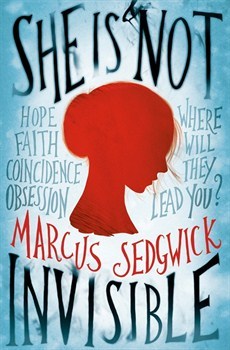
One hot day in August, 16 year old Laureth and her little
brother Benjamin board a plane for New York City. They are on a quest to find their father, who
has gone missing; after receiving a blackmailing email, Laureth suspects foul
play. Two problems: No one knows where
they are going, and Laureth is blind.
Both mystery and thriller, this unusual novel explores the idea of
coincidence. Is it a matter of
mathematical probability, or something more significant? Let the reader decide.

The beautiful Sinclair family have their very own island off
the coast of Massachusetts. Every summer
they go there to swim, play games and mess about in boats with their cousins --
until the fifteenth summer, when something unimaginable and tragic
happens. Even as the reader is led to an understanding of the tragedy,
along with the amnesiac narrator, it still manages to be surprising and
completely devastating. Beautifully
written and impossible to put down.
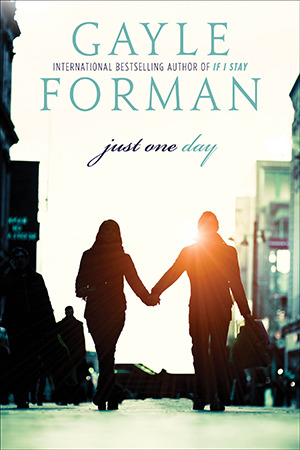
Allyson didn’t really
expect a summer trip to Europe would change her life, but when she makes an
impetuous decision to visit Paris with a near stranger there are far-reaching
consequences. Much more than a summer
romance novel, this engaging story explores how one crucial day can spin a life
into a whole new direction. The coming-of-age theme gets an emotionally
complex treatment in this novel for older YA readers.
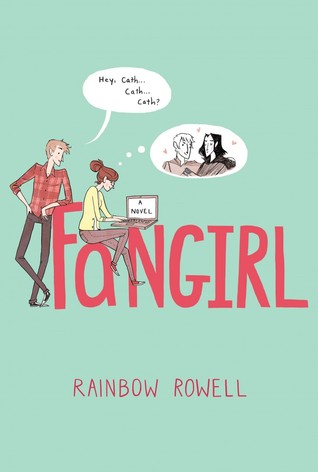
18 year old Cath:
first year university student, twin, and fan fiction writer with
reclusive tendencies. Cath has family
problems and love interest problems, and spends way too much time in a Harry
Potteresque fantasy world, but she also possesses a dry sense of humour and a
strong sense of self. Fangirl
describes the seductive power of a fictional world, and it creates
that, too.

This memorable book about friendship will appeal to younger
readers, or anyone who appreciates excellent writing and a well-told
story. When the book begins, main
character Georges is having a hard time.
His family has had to move, his mother is never at home and he is being
bullied at school. Georges’ only
potential new friend is a home-schooled spy called Safer – who never leaves
their apartment building. Full of
humour and quirky details, this book will surprise and thoroughly engage its
readers.
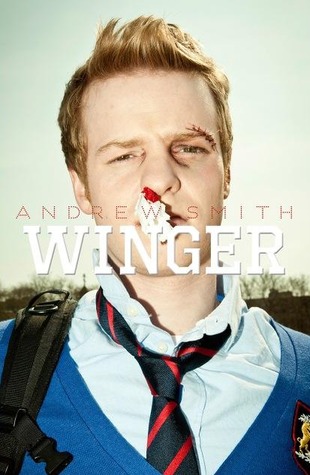
Ryan Dean West:
gifted student, excellent athlete, lover of women, genius cartoonist.
Ryan Dean West: 14
year old self-described “loser.” Hyperactive and prone to social gaffes.
Ryan Dean West: two
years younger than everyone else, but looking for a level playing field.
RDW punches above his weight and so does this humorous
novel, with unexpected serious and touching moments. The quantity of excellent cartoons edges this
novel into graphic territory.
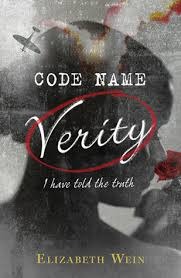
Two young British
women, both of them trapped in Nazi-occupied France in 1943. Two friends, one a pilot and the other a
spy. Nazi interrogation will force one
girl to give up her secrets, but how much of her story is truth – and how much
lies? This compelling story of
friendship and bravery combines a wealth of historical research with a
thrilling plot.
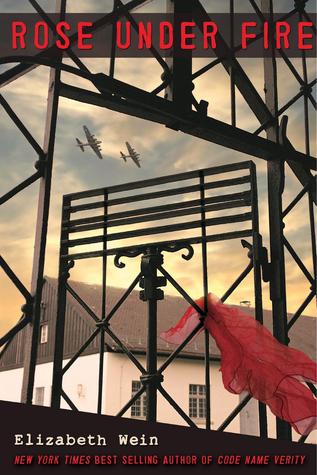
This gripping sequel to Code
Name Verity tells the story of a young American pilot named Rose
Justice. When a risky flight manoeuvre
results in Rose’s capture by the Germans, she finds herself in Ravensbrück–
one of the notorious Nazi concentration camps. There, Rose is befriended by a
group of political prisoners who have survived unimaginable atrocities. Together, they will use the power of stories,
poetry and friendship to overcome the horror and despair of their situation.
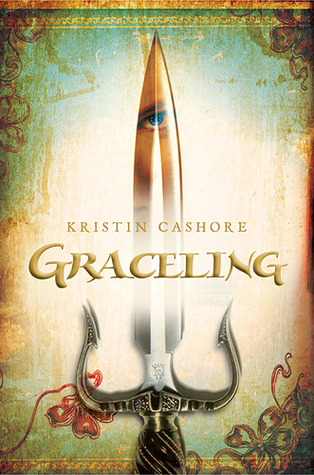
Lady Katsa is the best fighter in the realm – and the tool
of her uncle, a cruel and corrupt king.
Graced by extraordinary skills, Katsa rejects her role of royal thug and
dedicates her protection to a vulnerable young princess instead. This original fantasy, the first in a
trilogy, will be particularly appreciated by readers seeking strong female
characters. Author Kristin Cashore
skilfully blends romance and adventure in this emotionally satisfying
novel.
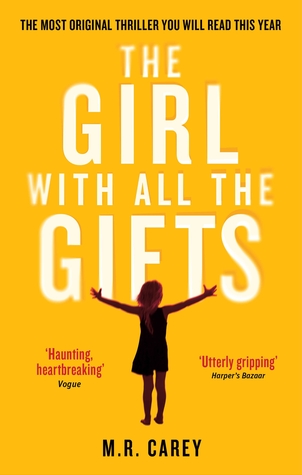
Melanie is the smartest girl in the class, but she doesn’t
understand why she and her fellow students are kept locked in their wheelchairs
all the time. She doesn’t know why they
never go out into the world they read about in books. Dr. Caldwell sees Melanie as the key to
saving what is left of a ruined world, but she expects to find her truths on an
operating table – and Melanie has other ideas.
This post-apocalyptic thriller was written for adults, but mature teen
readers will find it an exciting, engrossing read.
TRAC invites
you to visit us at www.tracbook.com
Please let us
know what you think of our list via Twitter @trac_book
Email
questions or feedback to info@tracbook.com
Subscribe to:
Posts (Atom)