Showing posts with label World War II. Show all posts

Wednesday, 5 April 2017

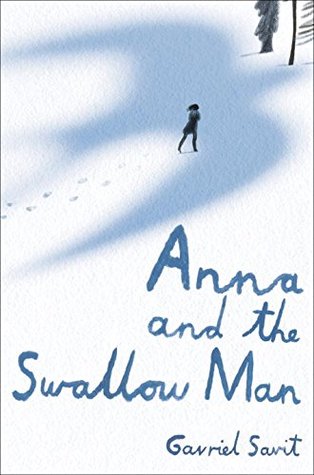
Anna and the Swallow Man


As a parent and educator, I have often thought about the question of how (and when) we introduce the more unpalatable, more disturbing 'stories' from our own human history.  I was about 12 when I read The Diary of Anne Frank for the first time, and not much after that, I watched the television series Holocaust.  Such cruelty, such kindness, such bravery; such despondency, such hopefulness and sheer determination to live:  how do we reconcile those completely opposite human behaviours and feelings?  How do we even begin to make sense of them?  The vast, complicated story of World War II is one that keeps getting told, and perhaps there are some who would argue that we don't need another book about this historical time period.  Personally, I still find the subject fascinating; but I would also argue that in a book as good as this one, the historical background - while obviously not irrelevant - is also not entirely critical for an appreciation of what this author achieves.

The book begins in Krakow, Poland on November 6, 1939.  Anna has just become orphaned, although she doesn't understand that yet.  Her father, a linguistics professor, has been rounded up by the Gestapo - along with the other professors in the city.  He will not die immediately, but he will disappear from Anna's life forever.  Anna is waiting in the street when a tall, thin man appears.  He is a man without a name, and a man who wishes to remain anonymous.  The man can conjure birds from the sky; Anna is reminded of the wise King Solomon, but Solomon is a bad, dangerous name to have in Poland in 1939.  A twisting of the word Solomon, an association with the swallow that alights on her finger, and the tall, thin man becomes Anna's Swallow Man.  There is much bird imagery in this book; like birds, the two main characters are constantly migrating - not so much with the seasons, but just to avoid being noticed.  Their looping peregrinations through the forests and wetlands of Polands take them nowhere but always away from present danger, and eventually through the years.  Their goals are twofold:  to avoid capture, and to stay alive. 

Both Anna and the Swallow Man speak a number of languages, but the language of "Road" becomes their primary tongue.  The language of Road is one of subtle adaptation; Anna learns that you become whichever passport or accent you need to be in order to blend in.  Road has different rules; in Road, not telling the truth is not the same as lying.  Anna's first lesson is that "people are dangerous.  And the more people there are in one place the more dangerous the place becomes."  Her second lesson is that "human beings are the best hope in the world of other human beings to survive."  Think about how true that is . . . not just in World War II, but at any time.

Savit is certainly not the first writer to use the naive child's perspective as a way of approaching horrors more indirectly, more obliquely.  John Boyne's The Boy in the Striped Pyjamas definitely comes to mind; and while some readers love that book, others deplore it for its historical inaccuracies.  While Savit employs all of the literary techniques of allegory and analogy - and there are even touches of magical realism - there is something more fundamentally true about his book.  Despite its 7 year old protagonist, though, this is not a children's book.  I would recommend it for young adults with large vocabularies, a philosophical bent and a tolerance for ambiguity; and that goes for adult readers, too.  


Click icon for more
book review blogs
@Barrie Summy

Wednesday, 4 November 2015

The Montmaray Journals


The Montmaray Journals:
A Brief History of Montmaray (Book I)
The FitzOsbornes in Exile (Book II)
The FitzOsbornes at War (Book III)

When I was researching war novels targeted at the Young Adult audience, I came across Australian author Michelle Cooper's The Montmaray Journals -- and I suspected, quite correctly, that they would be just the sort of thing I like.  A tumultuous, dramatic time period, an eccentric family, strong female characters, action, adventure and political intrigue:  yes, please.

World War II provides an endlessly fascinating canvas for fiction, and this trilogy of novels set during the period of 1936-1944 covers far more ground than most.  This is not just a portrait; it's a vast landscape, but always with Sophia (the narrator) and her family in the foreground. If your historical knowledge is a bit sketchy, or if you were taught that World War II began with the bombing of Pearl Harbor, you will be particularly (and delightfully) enlightened.  

The first novel begins on a tiny island called Montmaray in the Bay of Biscay.  The Montmaravian Royal Family has been reduced to King John (who has never recovered from losing his entire regiment to World War I), his daughter Veronica (passionate about history and politics) and Toby, Sophia and Henry (Henrietta) -- their orphaned cousins.  Rebecca, the housekeeper, and her son Simon are also central to the plot.  The author has an ingenious way of involving this miniature and seemingly irrelevant kingdom in the churning political sea of the mid 1930s.  The Spanish Civil War, Nazi Germany's Ahnenerbe research and the League of Nations are all plot-points involving Mortmaray and its young royal family -- whilst also giving rich historical context to the events leading up to World War II.   The best bit is that Cooper is never guilty of info-dumping.  Instead, she sprinkles and folds her historical facts into a cracking good story.

There has been a strong trend for blending "historical fact and imaginative fiction" (as Cooper describes it in her Author's Note), and I am all for it.  Elizabeth Wein's brilliant Code Name Verity and Rose Under Fire used the same strategy and they are amongst my favourite war novels of all time.  Like The Montmaray Journals, they are epistolary novels:  told through a series of diary entries, they create both an intimate, confiding tone and a particularly suspenseful way of shaping a story.  The other obvious similarity between these novels is the way that young women are at the forefront of the action -- not just because they narrate the story, but because they are actively engaged in their own "war" stories.  When I was an adolescent, we only had Anne Frank's The Diary of a Young Girl -- also a wonderful book, but undeniably a more passive point of view.

Another delight of this trilogy is the way that the author references literature and poetry, often symbolically. Sophia, the narrator the story, is a passionate reader and story-teller.  Throughout the trilogy, Sophia has a book to hand.  At the beginning, when she is far more sheltered and romantically inclined, she is reading Pride and Prejudice.  As Great Britain edges into the war, she is reading Virginia Woolf's Three Guineas.  Unless you are completely unfamiliar with Dodie Smith's classic novel, it would be impossible to miss the homage to I Capture the Castle.  The FitzOsbornes in Exile begins with a deliberate echo of that famous opening line:  "I write this sitting in the kitchen sink."  As the second book begins, Sophia and her family have been rescued from their crumbling castle and ensconced in their Aunt Charlotte's luxurious home in England.  "I write this sitting at an exquisite little Louis the Fifteenth secretaire in the White Drawing Room, using a gold fountain pen borrowed from the King of Montmaray and a bottle of ink provided by one of the footmen."   At the beginning of the trilogy, the parallels between Sophia and Cassandra in I Capture the Castle are so obvious that I was afraid that the novel would just be a pastiche of a beloved favourite.   Certainly the two novels share coming-of-age and first love themes, but A Brief History of Montmaray goes into quite unexpected territory -- and instead of feeling isolated in its 1930s setting, it is very much part of larger world-view.  Unlike heroines of old, Veronica and Sophia have far more to think about than the marriage plot.

In England, in November, you can see the distinctive red poppies everywhere.  We all have our own way of honouring Remembrance Day, but my recommendation is to immerse yourself in a good war novel -- or three of them, as is the case with The Montmaray Journals.


Click icon for more
book review blogs
@Barrie Summy