Wednesday, 3 February 2016

The Wolf Wilder


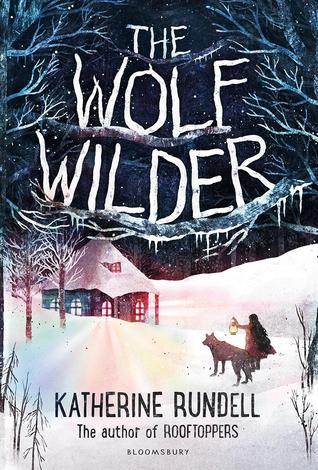
Thoroughly immersed in the BBC's sumptuous production of War and Peace, I have been in the mood for all things Russian in the past few weeks.  In my corner of England, we've yet to see snow -- but there is snow aplenty in Katherine Rundell's The Wolf Wilder.  The main character, feral wolf-girl Feo, plays with snow, hides in it, feeds it to wolf cubs and uses it as a weapon.

This is Russian winter set approximately 100 years after Leo Tolstoy's epic novel.  There are rumblings of revolution -- an ineffectual Tsar, decadent aristocrats and the cruel General Rakov who abuses his absolute power and serves as the novel's villain.  

Unlike War and Peace, this fairy-tale-like story takes place in the wild and on the fringes.  The three main characters -- Feo, Ilya and Alexei -- are a wolf wilder barely out of childhood (Feo), a young soldier who wants to be a dancer (Ilya) and a budding revolutionary (Alexei) who wants retribution for his burnt-out village.  Not forgetting the wolves, of course.  The wolves, like the children, still have enough wildness in them to resist brutal attempts at taming.

In this world, St. Petersburg aristocrats keep wolves as status-symbol house pets.  But wolves can only be tamed to a point.  The wolves are overfed and indulged until the day they rebel against their capricious masters and revert to their -- well, wolfish -- instincts.  This is where Feo and her fierce mother Marina come in.  They teach the wolves to be wild again; they return them to their rightful home and proud, fierce natures.  While the adults in this world are terrified of harsh retribution -- with the exception of Marina, who has been jailed for her defiance -- the children are still wild and bold enough enough to fight against unfairness.  Yes, the children show the adults the way . . . a time-honoured theme in children's literature.

Although there are hints of history, the book is more of an old-fashioned adventure story.  Feo goes on a journey, which is both literal and figurative, making friends along the way.  It ends with a triumphant storming of the city; although, inevitably, there are some sad losses along the way. Although it is probably a middle-grade book, according to the rules of judging these things, it has the ability to appeal to all ages.  As C.S. Lewis so wisely said, "A children's story that can only be enjoyed by children is not a good children's story in the slightest." 

If you care about the look and feel of books, do buy this one in the beautiful hard-cover edition. The combination of Rundell's spare, elegant words and Gelrev Ongbico's delicate, smoky illustrations is truly transporting.  The mood is Russian winter, folklore and fairy tales and wood-cuts, in all of its dangerous beauty.

For more information about the illustrator, and a peek at the gorgeous illustrations, I recommend this fabulous post at tygertale


Click icon for more
book review blogs
@Barrie Summy

Wednesday, 30 December 2015

Top Ten Reads from 2015

As we turn the final chapter of 2015, "best of" lists are popping up everywhere.
Like most avid readers, I am a sucker for recommendations from people who read a lot and really love books.

While reading tastes are highly individual, there is always some consensus:  certain books just have a can't-put-them-down quality about them.  Perhaps even more importantly, some books stick with you -- usually because they touch your emotions.  This year I read well over 100 Young Adult books -- a lot, but certainly nothing like a comprehensive sample.   There were definitely some notable trends, particularly in realistic fiction.  Mental health and sexuality/sexual identity were important issues in many high-profile books -- including the top four books on this list (three of them UKYA).

As the year ends, in a rush of activity and socializing, I am already longing for quiet January days. The truth is, I am always looking for my next best read . . .


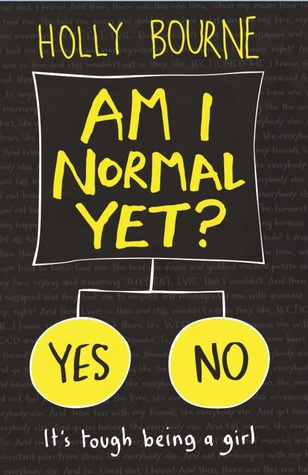
Am I Normal Yet?, by Holly Bourne

Evie desperately wants a fresh start.  After being hospitalized for a mental breakdown, caused by out-of-control OCD, Evie has got back on track.  Enrolled in Sixth Form College, she has new friends and even more than one potential love interest.  But being let down by one guy after another is starting to derail Evie’s recovery.  Even when her friends rally to her cause, Evie feels that her facade of ‘normal’ is showing some serious cracks.  Funny, frank and proudly feminist:  this book is a fresh, authentic voice.  (UKYA.  Contains some references to sexuality and drugs/alcohol.)


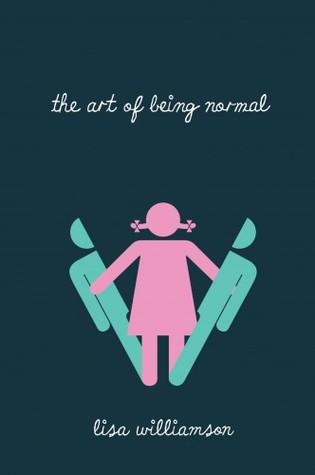
The Art of Being Normal, by Lisa Williamson

David’s parents assume he is gay, but the truth is more complicated.  Although he has supportive friends, he still feels completely isolated by his painful reality:  his body doesn’t match his sense of himself.    Leo Denton is new to David’s school, but he brings a tough reputation with him.  When Leo defends David against the usual bullies, the two become allies – and then friends.     This brave, emotionally involving book explores transgender issues through believably complex characters.
(UKYA)


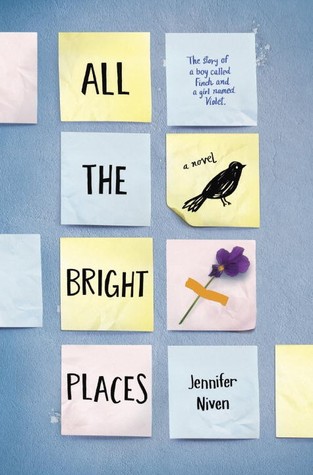
All the Bright Places, by Jennifer Niven

When Fitch and Violet meet on the ledge of the bell tower, it is debatable as to who is saving whom.  Violet hasn’t recovered from her sister’s death, while Fitch – the class “freak” – struggles with highs and lows that he cannot control.  Tentative friendship turns into romance, but can there be a happy ending for this unlikely pair?  Moving and memorable:  this relationship novel  will really engage your emotions.  (Contains some strong language, sexual scenes and emotionally disturbing material.)


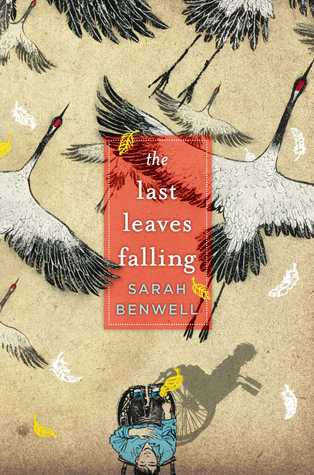
The Last Leaves Falling, Sarah Benwell

For most 17 year-olds, death is an abstract concept; for Abe Sora, it is a grim reality.  After being diagnosed with ALS, Abe is trapped in his failing body and isolated in his bedroom.  Longing for anonymity, he searches for connections in online chat rooms.  Unexpectedly, he makes real friends there – and not just virtual ones.  With the help of his friends, Abe figures out how to meet death on his own terms.  Thoughtful and funny, this book takes a morbid subject and turns it into a truly life-enhancing story.  (UKYA)


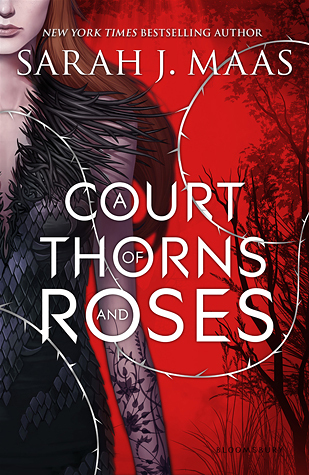
A Court of Thorns and Roses, by Sarah J. Maas

Deep in the winter woods, 19 year-old Feyre kills a wolf and unknowingly triggers a dark curse.  Taken hostage by the fearsome Tamlin, Feyre is trapped in a luxurious but confining world.  Despite their bad beginning, Feyre’s sympathy for her captor grows – until she is willing to risk her own life to save him.  The compelling and romantic fantasy sets the Beauty and the Beast motif in a complex faerie realm.  This is grown-up YA for fantasy lovers.  (Contains violence and sexuality.)


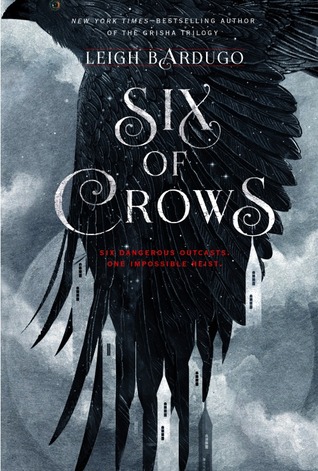
Six of Crows, by Leigh Bardugo

In the mean streets of Ketterdam, six unlikely allies will be recruited to break into the unbreakable fortress of the Ice Court.  Their mission:  to liberate a scientist/inventor who holds the secret to manipulating Grisha magic.  Their price:  enough money to escape from their dangerous, dead-end lives.  This fast-paced heist story is the first in a new series by Bardugo . . . intricately plotted, with richly shaded characters.


Crow Moon, by Anna McKerrow

As the world runs out of fossil fuel, environmentally minded people have established a “Greenworld” in Devon and Cornwall and returned to the old ways of living.  Powerful witches, like Danny’s mother, work to keep out the unscrupulous gangs who would exploit the earth’s natural energy.  Danny is more interested in girls than magic, but he is drawn into the battle between the Greenworld and the gangs.  Although Danny doesn’t understand his own magic, forces on both sides need it – and will stop at nothing to get it.  This book excels at both plot and characterisation, and gives a topical post-apocalyptic spin on a more traditional fantasy landscape.  (UKYA)


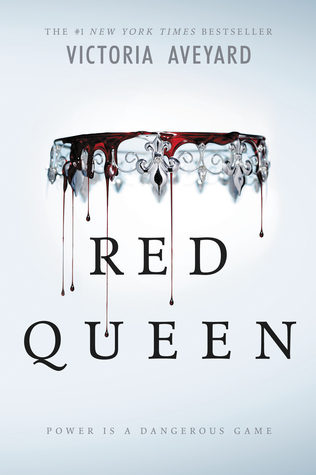
Red Queen, by Victoria Aveyard

In the Kingdom of Norta, the Silvers are born to rule while the Reds are born to serve.  Any Red who cannot find a job will become cannon fodder in the long-running war.  Mare is a lowly Red, a former pick-pocket turned serving girl; but when it is discovered that she possesses an unusual power, the Royal Court decides to make different use of her.  Mare is transformed into a long-lost Silver noble and engaged to Maven, the younger prince.  It is a dangerous game of subterfuge, made even riskier when a Red terrorist operative enlists Mare’s help.   Twisty and unexpected, this best-selling fantasy novel will fill The Hunger Games gap.


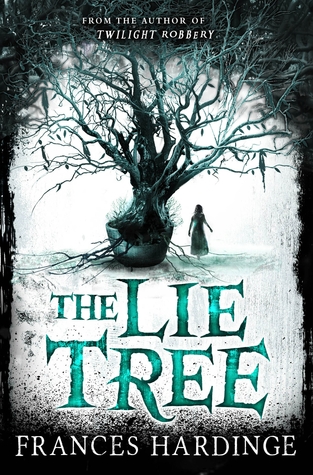
The Lie Tree, by Frances Hardinge

In this historical fantasy, a young girl refuses to conform to the Victorian belief system that females should be ‘good’ but not clever.  Faith’s father is a renowned natural scientist whose reputation has been tainted by scandal.  When he dies under mysterious circumstances, on the remote island of Vane, Faith is determined to prove that his death was not a suicide – but rather a murder.   Applying logic, observation and misdirection, Faith is determined to salvage her father’s reputation.  This beautifully written book is a suspenseful murder mystery, but also a thoughtful analysis of women’s roles in Victorian England.


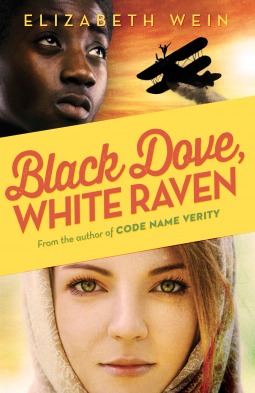
Black Dove, White Raven, by Elizabeth Wein

Best friends Delia (Black Dove) and Rhoda (White Raven) are stunt flyers during the 1920s, but the ongoing racism in the southern United States inspires a dream:  to emigrate to Ethiopia, the one African country which has never been colonized.  After a freak accident kills Delia, Rhoda is determined to keep her partner’s dream of equality and freedom alive.  Despite the difficulties, Rhoda transplants Delia’s son Teo and her own daughter Emilia to a coffee collective in Ethiopia.  But as Teo and Emilia come of age, Mussolini’s Italian army invades Ethiopia and their family is drawn into the tragic conflict.  This fascinating story highlights a cultural and historical setting that rarely gets attention in YA literature.

Still on my TBR pile:
Other YA books which have been getting lots of positive buzz include Asking for It, by Louise O’Neill; The Rest of Us Just Live Here, by Patrick Ness; Finding Audrey, by Sophie Kinsella; An Ember in the Ashes, by Sabaa Tahir; Simon vs. The Homo Sapiens Agenda, by Becky Albertalli; Winter, by Marissa Meyer; One, by Sarah Crossan; and the list just goes on!  

Happy reading in 2016. . .

For other reading recommendations and themed book lists, visit TRAC's website

Monday, 30 November 2015

A Brighter Fear


There comes a terrible moment to many souls when the great movements of the world, the larger destinies of mankind, which have lain aloof in newspapers and other neglected reading, enter like an earthquake into their own lives . . .
George Eliot, Daniel Deronda 

What is it like to live in a war zone?
Would you save yourself, if you had the chance, even if it meant abandoning your loved ones?
Would you leave your country, maybe forever, or would you take your chances and stay?

In A Brighter Fear, UKYA author Kerry Drewery imagines civilian life in a war-zone from the point-of-view of 16 year-old Lina.  As with most teenagers, Lina's life before the war is dominated by school.  As the child of educated, professional parents, Lina has devoted herself to her studies, has taken pride in her city's history as a seat of learning, and has dreamed of becoming an architect.  But when U.S. forces invade Baghdad in the spring of 2003, Lina's life becomes so narrow that it finally shrinks to the form of day-today survival.  The former realities of school, parents and friends cease to exist.

Drewery vividly describes the fear of the unknown, as the city prepares for invasion, and then the chaos and destruction which follows.  Wreckage is everywhere, as are dead bodies.  Soldiers stalk the streets in their tanks, and bombs are an ever-present threat.  Utilities are unreliable or nonexistent, as is news.  No one's home is safe. The future does not feel like something anyone can plan for or rely on anymore.

Although Drewery's story does not glorify Saddam Hussein's brutal reign -- indeed there is a subplot involving Lina's mother, who was imprisoned for refusing to cooperate with Hussein's government -- it is also clear that war always brings unintended consequences.  The Americans may have intended to bring democracy and freedom to Iraq, but in reality the chaos and confusion allows sectarian violence to flourish.  Although Lina's family are Christian, she must adopt the concealing clothing and hijab of Muslims in order to protect herself from the vigilante justice of fundamentalists. And even when her family cooperates with the American soldiers, there is a high price for that cooperation.  When Lina is presented with the chance to escape Baghdad, she has to weigh the complete unknown against the present risk -- both to herself, and someone she loves dearly.

As the debate about Syrian refugees takes place in the media, between governments, and at dinner tables, it is really worth trying to imagine war-torn lives compassionately.  Hopefully, most of us will never experience life in a war-zone, but even if we have the good fortune to escape that "earthquake" in our lives there is a chance that we may come into contact with those who haven't been so lucky.  It is nearly impossible to imagine pain when we have not experienced it for ourselves, but a powerful story may come closer than anything else to bridging that gap.  A Brighter Fear is painful to read, but only because it illuminates the kind of realities that are far more painful to experience.


A Brighter Fear and other war novels can be found at "War and Remembrance" at TRAC.
For more recommendations on books which feature refugees please read this post from the Sarah Laurence blog.

Wednesday, 11 November 2015

Poppy


In Flanders field the poppies blow
Between the crosses, row on row,
That mark our place; and in the sky
The larks, still bravely singing, fly
Scarce heard amid the guns below 

John McCrae 'In Flanders Fields', Essex Farm 1915


For several weeks before Armistace Day, the cheerful red poppies associated with the Royal British Legion's annual Poppy Appeal are omnipresent in England.  Every schoolchild knows that they are associated with World War I:  with 'remembrance', with honouring the dead, with supporting the armed forces.  The two minute silence is honoured all over the country, but I wonder how many young people are focusing their thoughts on sacrifices made so long ago?  For those who do not have a specific family member to remember, is there another way to make a mental and emotional connection with 'historical' events?  I would argue 'yes'.  A well-told story has the ability to powerfully concentrate the mind, and there are several recently published UKYA novels that truly do bring World War I back to life again. 

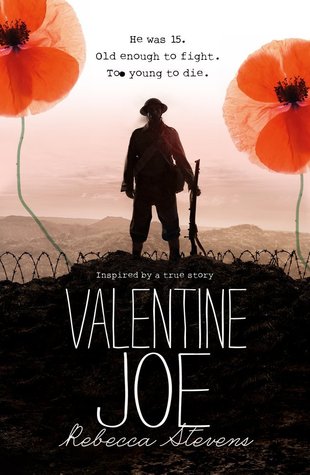
Rebecca Stevens published Valentine Joe in 2014, the centenary of the beginning of the war. Valentine Joe Strudwick was a real person; he died at Ypres at the age of 15, and was buried in the Essex Farm cemetery immortalized by John McCrae's famous poem.  In this unusual novel, a contemporary storyline is skilfully woven together with the historical one.  Rose and her Grandad are visiting Essex Farm when she spots Valentine Joe's gravestone.  Rose is still in mourning for her own father, who has recently died.  Through the device of a scrappy stray dog called Tommy, Rose manages to time-travel back to the battleground of Ypres and meet Joe.  Rose's state of mind is so attuned to grief and loss that she is able to connect directly with Joe, and in a very sweet and subtle way they each manage to heal something in the other.  History really is brought back to life in this book. 

Mary Hooper, a name particularly associated with historical fiction for young adults, has published two novels in the last 18 months which view the 'War to End All Wars' from the perspective of Poppy Pearson, a young VAD nurse.  At the beginning of the war, Poppy is working in 'service' as a parlourmaid for the de Vere family.  Poppy is intelligent and able, but social class and lack of money -- her mother has been widowed with four children -- have narrowed her options.  The war brought many unexpected social changes, particularly for women, and Poppy is able to develop useful skills, travel and mix with other social classes precisely because qualified nurses were in such demand.   Initially, Poppy is attached to a hospital in Southampton; later, in Poppy in the Field, she nurses wounded and dying men in France.  The storyline touches on how the brutality of trench warfare forced improvements and innovations in medical care -- everything from the mental illness described as 'shell shock' to experimentation in plastic surgery and prosthetics.   Throughout both novels, the broken bodies and spirits that Poppy tends to are made very real.  There is one particular scene in which Poppy has to clean up a soldier nicknamed 'Tibs' who has came straight from the battlefield. The description of Poppy cutting off Tibs' boots, and discovering an advanced case of trench foot, is not one that I will soon forget.  But having said that, the narration is far from melodramatic.  The novel has many poignant moments; but considering the source material, how could it be otherwise?
World War I changed the world in many ways, but one enduring legacy has been a change in the way war itself is viewed. 


Wednesday, 4 November 2015

The Montmaray Journals


The Montmaray Journals:
A Brief History of Montmaray (Book I)
The FitzOsbornes in Exile (Book II)
The FitzOsbornes at War (Book III)

When I was researching war novels targeted at the Young Adult audience, I came across Australian author Michelle Cooper's The Montmaray Journals -- and I suspected, quite correctly, that they would be just the sort of thing I like.  A tumultuous, dramatic time period, an eccentric family, strong female characters, action, adventure and political intrigue:  yes, please.

World War II provides an endlessly fascinating canvas for fiction, and this trilogy of novels set during the period of 1936-1944 covers far more ground than most.  This is not just a portrait; it's a vast landscape, but always with Sophia (the narrator) and her family in the foreground. If your historical knowledge is a bit sketchy, or if you were taught that World War II began with the bombing of Pearl Harbor, you will be particularly (and delightfully) enlightened.  

The first novel begins on a tiny island called Montmaray in the Bay of Biscay.  The Montmaravian Royal Family has been reduced to King John (who has never recovered from losing his entire regiment to World War I), his daughter Veronica (passionate about history and politics) and Toby, Sophia and Henry (Henrietta) -- their orphaned cousins.  Rebecca, the housekeeper, and her son Simon are also central to the plot.  The author has an ingenious way of involving this miniature and seemingly irrelevant kingdom in the churning political sea of the mid 1930s.  The Spanish Civil War, Nazi Germany's Ahnenerbe research and the League of Nations are all plot-points involving Mortmaray and its young royal family -- whilst also giving rich historical context to the events leading up to World War II.   The best bit is that Cooper is never guilty of info-dumping.  Instead, she sprinkles and folds her historical facts into a cracking good story.

There has been a strong trend for blending "historical fact and imaginative fiction" (as Cooper describes it in her Author's Note), and I am all for it.  Elizabeth Wein's brilliant Code Name Verity and Rose Under Fire used the same strategy and they are amongst my favourite war novels of all time.  Like The Montmaray Journals, they are epistolary novels:  told through a series of diary entries, they create both an intimate, confiding tone and a particularly suspenseful way of shaping a story.  The other obvious similarity between these novels is the way that young women are at the forefront of the action -- not just because they narrate the story, but because they are actively engaged in their own "war" stories.  When I was an adolescent, we only had Anne Frank's The Diary of a Young Girl -- also a wonderful book, but undeniably a more passive point of view.

Another delight of this trilogy is the way that the author references literature and poetry, often symbolically. Sophia, the narrator the story, is a passionate reader and story-teller.  Throughout the trilogy, Sophia has a book to hand.  At the beginning, when she is far more sheltered and romantically inclined, she is reading Pride and Prejudice.  As Great Britain edges into the war, she is reading Virginia Woolf's Three Guineas.  Unless you are completely unfamiliar with Dodie Smith's classic novel, it would be impossible to miss the homage to I Capture the Castle.  The FitzOsbornes in Exile begins with a deliberate echo of that famous opening line:  "I write this sitting in the kitchen sink."  As the second book begins, Sophia and her family have been rescued from their crumbling castle and ensconced in their Aunt Charlotte's luxurious home in England.  "I write this sitting at an exquisite little Louis the Fifteenth secretaire in the White Drawing Room, using a gold fountain pen borrowed from the King of Montmaray and a bottle of ink provided by one of the footmen."   At the beginning of the trilogy, the parallels between Sophia and Cassandra in I Capture the Castle are so obvious that I was afraid that the novel would just be a pastiche of a beloved favourite.   Certainly the two novels share coming-of-age and first love themes, but A Brief History of Montmaray goes into quite unexpected territory -- and instead of feeling isolated in its 1930s setting, it is very much part of larger world-view.  Unlike heroines of old, Veronica and Sophia have far more to think about than the marriage plot.

In England, in November, you can see the distinctive red poppies everywhere.  We all have our own way of honouring Remembrance Day, but my recommendation is to immerse yourself in a good war novel -- or three of them, as is the case with The Montmaray Journals.


Click icon for more
book review blogs
@Barrie Summy

Wednesday, 14 October 2015

Cuckoo Song


After a mostly glorious and golden beginning to October, today was the first day when I really felt the in-betweenness of the seasons.  The wind, brisk and biting, definitely had the chill of winter.  I have been reading lots of ghost stories lately -- not really my favourite genre, but I like them when the "ghost" is more of a subtle, symbolic thing.

Halloween and Guy Fawkes Day and Remembrance Day have a tendency to slide together in England, as they all take place within two weeks and just at that time of the year when Daylight Savings conspires with the natural dying of the day and plunges us all into darkness.  If you really want to go with that mood, I don't think you can do much better than Frances Hardinge's Cuckoo Song.

There is a ghost in the house at The Beeches, Luther Square, Ellchester.  The father of the house may be Mr. Piers Crescent, civil engineer and designer of the railway bridges and station which will save Ellchester, but he hasn't been able to save Sebastian -- his oldest child, and only son, who died in the final months of the Great War.  Although Mr. Crescent has done his best to stop time, and wrap his daughters Triss and Pen in cotton-wool, he has made something of a bad bargain (literally) with a sinister Architect.  The entire family has been arrested in a prolonged state of grieving, and the inability of the parents to let go of their dead son has lead, directly, to the events which take place in this novel.

The War had ended, but it was not gone.  Somehow it was still everywhere.  Sebastian was the same. He had ended but he was not gone.

Like all the best children's books, this book operates on two levels -- thus making it appropriate for ALL ages. On the more surface level, this book is about a changeling (a "cuckoo") who is substituted for a real girl. Only gradually does "Triss" realise that she is actually a not-Triss -- and just a "monster" or made-up thing with an expiration date.    Unlike the real Triss, not-Triss (who later becomes Trista) is "allowed" to be something other than the "sweet, quiet, well-behaved girl" that her parents expect and want.  She has agency; she does things and makes things happen.  She eats dolls instead of playing with them.   Somewhat like Alice's Adventures in Wonderland, not-Triss ventures into an alternate world -- the world of the Besiders -- and uses her wits to bargain for something which will change the outcome of not just her brief existence, but lots of other realities, too.

But there is a more complex level to this book; truly,  I think that all of the best fantasy novels have that ability to throw some light on what we like to call the "real" world.  That aspect of the book deals with the aftermath of World War I and how it impacts not just one grieving family but an entire society. The novel manages to take in the changing role of women -- and there is fascinating commentary here about the "containment" of the feminine -- but also how the war changed the "certainties" (religious faith and class structure) of the country.

One of the subversive female characters is Violet Parish, the former fiancée of Sebastian.  She has bobbed hair, rackety friends, a variety of short-term jobs and she drives a motorcycle; she drinks and smokes and is generally "fast".  She also takes in Pen and Triss when no one else will.


Once she had been 'Violet'.  After Sebastian's departure she had been 'poor Violet'.  And then somehow, in the years since his death, her name had blackened and speckled in Triss's family home, like a fruit left to rot, until it was thrown out and no longer allowed in the house.
A specific pleasure of this book is the quality of the writing; Hardinge has a wonderfully expressive way with words.  I cannot think of another writer who uses figurative language with such fresh precision.  I felt, often, the urge to copy sentences and paragraphs down -- to capture the words for myself -- just because they pleased me so much.   It wasn't a book that I would have sought out if left to follow my usual tastes, but it was a suspenseful, thoughtful and pleasurable reading experience.


Click icon for more
book review blogs
@Barrie Summy

Wednesday, 7 October 2015

Feminism in UKYA


“We need to reclaim the word 'feminism'. We need the word 'feminism' back real bad. When statistics come in saying that only 29% of American women would describe themselves as feminist - and only 42% of British women - I used to think, What do you think feminism IS, ladies? What part of 'liberation for women' is not for you? Is it freedom to vote? The right not to be owned by the man you marry? The campaign for equal pay? 'Vogue' by Madonna? Jeans? Did all that good shit GET ON YOUR NERVES? Or were you just DRUNK AT THE TIME OF THE SURVEY?” ― Caitlin MoranHow to Be a Woman


Feminism has been a contentious word for a while, and many young women seem to associate it, pejoratively, with certain outmoded ideas:  man-hating, for instance, or hairy armpits.  Women who define themselves as feminists are considered seriously unattractive -- or unattractively serious -- as if they can be conflated into much the same affliction.  What is even more troubling, at least to me, is that population of women/girls who think that feminism is no longer necessary because the "battle for equality" has already been won.  And yet, so many of the statistics that make up our lives (e.g., equal pay, sexual violence, rights over our own bodies) suggest otherwise.

In the past year, I've read some really strong UKYA books that take on feminist issues in ways that are brave, honest, provocative and deeply thoughtful.  These books are holding a mirror up to our society and showing us exactly how much work still needs to be done.  The word "feminism" certainly never appears in the speculative dystopia that is Only Ever Yours, but O'Neill gets her message across more than effectively.  The mirror she holds up is distorted, definitely, but anyone should feel the horror of recognition of what shows up there.  Am I Normal Yet? takes a more straightforward approach and engages in up-front consciousness raising.

Margaret Atwood's The Handmaid's Tale was the cautionary tale for my generation of young women seguing into adulthood.  Written in 1986, my first year at university, Atwood's influential dystopia imagined a poisoned world where the birth-rate has fallen to an alarmingly low "no replacement" level.  Although the true cause of widespread sterility was more to do with chemical warfare, women get scapegoated.  The pill, abortions, educated women wanting to work rather than be mothers: all of this dangerous reproductive freedom is held up for blame.  And then it is all taken away.  Before long, women have no control over their own bodies; if they are fortunate enough to be fertile, they become vessels -- willing or not -- for childbirth

Atwood was writing in a post Roe v. Wade world, after the first (or arguably the second) wave of feminism.  She noted the growing popularity of fundamental Christianity, and her novel served as a warning that hard-won rights for female equality were a slippery slope -- and that it was frighteningly possible to slip backwards.

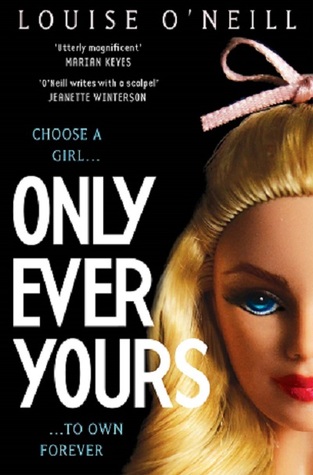
As I was reading Louise O' Neill's Only Ever Yours  -- which contains such deliberate parallels to Atwood's dystopic vision that it has been marketed as "A Handmaid's Tale meets Mean Girls" --  I kept thinking about Atwood's warning to women.   In both dystopias, women are reduced and confined to one of three roles:  wife/companion, concubine, or chastity/"martha" (in essence, a  desexualised cross between a nursemaid and a prison warden). They are a sisterhood which is divided in every possible way and exists only to please and serve men.

Although the creeping religious fundamentalism that Atwood identified has certainly manifested itself, perhaps even more obviously in the Islamic faith than the Christian, the most profound cultural influence of our age has been distinctly secular:  the rise of narcissism.  Social media, reality television, selfies, You-Tube, the popularity of the Kardashians, and the list could go on and on.  Can anyone under the age of 30, can anyone at all, escape from the picture-taking mirror we keep gazing into?  Our smart-phone cameras are mediating our entire existence.  The importance of physical appearance, the relentless pursuit of physical perfection and constant self-promotion are our culture's new holy trinity.  Only Ever Yours  is a truly frightening book, not only because it imagines what we could could become -- but because it identifies (and satirises) so accurately what we already have become.  When the narrator of  Only Ever Yours is punished, her internet privileges are taken away.  It is as if her very self is being erased.  "The need to record my life is as fundamental as my need to breathe.  Without MyFace, I'm floating.  I have nothing to anchor me down, to prove I exist."

In O'Neill's dystopia, women have been genetically engineered to the point that any notion of diversity has been almost entirely lost.  As with Barbies, the prototype is exactly the same with slight adjustments in eye, skin and hair colour.  Women, who are called "eves" and numbered like prints in the same series, read like a paint chart.  Isabel, or rather"isabel", as women are never dignified with capital letters, is described as:  PO1 Metallic Silver hair and #76 Folly Green eyes.  Although the girls are told that they have been "perfectly designed", they are constantly exhorted to improve themselves.  But that quest for improvement is limited, entirely, to physical appearance -- obvious intelligence, or any attempts to cultivate the mind, are discouraged.  Curiosity, like anger, is an "unacceptable emotion".   Every week the girls are ranked, according to attractiveness, and there is constant competition with no prize at the end. Although they are meant to be happy and positive, they live a goldfish bowl existence of staring at themselves all day and seeing nothing but flaws, magnified.  Eating disorders and self-harm, as exemplified by isabel, are the only outlets for mental pain -- and the only ways in which the girls can "own" or control a body that has been created for a man's eventual use.

One of the most painful aspects of the society described in Only Ever Yours is the way that women are pitted against each other in an endless beauty contest.  There is no way for friendship to survive in an atmosphere of constant competition.  The Queen Bee character is called megan, and her cunning manipulations were almost unbearable to read.  It was only after I finished the story, and had some distance from it, that I could partly admire megan for the way she utilises personal power in a pretty powerless situation.

Am I Normal Yet? is a very different kind of book from Only Ever Yours, but in many ways it is examining exactly the same kinds of pressures that are brought to bear on adolescent girls (not to mention grown-up women).  Both books show how females mentally flay themselves with negative scripts, especially ones that have to do with being attractive and/or worthy of love.  Both books deal with mental illness.  Perhaps the major difference between the books -- other than the tone, of course, because one is a dystopia which makes its point through cruel satire while the other is both humorously and earnestly realistic -- is in the portrayal of female friendship.

The protagonist of Am I Normal Yet? is Evie, a 16 year-old girl who has just started Sixth Form College.  Evie is hopeful that a new school will be a fresh start for her, but she is hiding a big secret: she suffers from Obsessive Compulsive Disorder (OCD) and Generalised Anxiety Disorder.   Evie is on medication and sees a therapist regularly, but she feels constant anxiety about being able to maintain the "illusion" of "being normal".  When she makes new friends, specifically Amber and Lottie, she suppresses the truth about what she has suffered:  "mainly because they seemed to like who I was and I didn't want to tarnish the illusion."

One of the big themes in Am I Normal Yet? is the relationship between the sexes.  For Evie, part of being "normal" is being in a romantic relationship -- but she keeps butting up against the harsh reality that teenage boys don't necessarily want the same things as teenage girls do.  Evie and her friends set up a feminist support group, which they jokingly refer to as The Spinster Club, but while they discuss a variety of feminist issues, they ruefully acknowledge that the conversation seems to keep veering towards boys and the mixed signals they send.  At the beginning of the book, Evie's therapist warns her against relationships with teenage boys:  "they can make you overthink and overanalyse and feel bad about yourself . . . and they can make even the most 'normal' girls feel like they are going crazy."

The girls are pretty clued-up on not relying on boys for their own self-esteem, and yet the progress of the plot makes it clear that being jerked around tends to trigger negative mental scripts -- especially for Evie, who is quite vulnerable to the bad voices in her head.  This book is terrific for educating readers about mental illness -- the character of Evie definitely "normalises" her condition by describing its symptoms and treatment in a very relatable way -- but one of the most interesting things it does it connect mental illness with the historical treatment of women.  At the end of the novel, Evie makes the point that women are far more likely to suffer from certain types of mental illness -- depression, eating disorders, self-harm -- and that they turn powerlessness inwards. "I believe the world, our gender roles, and the huge inequality we face every day MAKES US crazy," Evie tells her friends in an impassioned speech at the end of the book.  

The female friendships that Evie makes are an important part of her support system; being able to finally confide in Amber and Lottie is part of her growth.  The book sends a strong message that female solidarity is of paramount importance to female mental health.  If women don't stick up for each other, who else is going to do it?


Only Ever Yours can be found on TRAC's Fantasy reading list  and  Am I Normal Yet? can be found on TRAC's Overcoming Adversity reading list.

Author Holly Bourne runs The Site, an advice and information forum for young women.