Wednesday, 6 April 2016

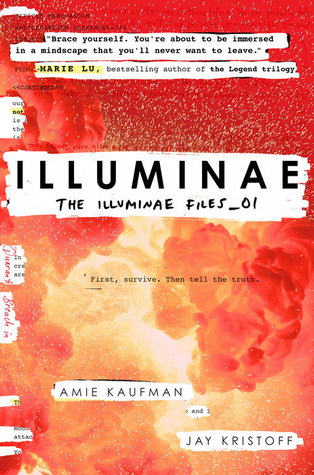
Illuminae


Does this book cover draw you in or put you off?

I'm a big believer in the importance of reading outside of your comfort zone . . . not all the time, but certainly once in a while.  Although I've enjoyed some science fiction books, sci-fi is definitely not the first genre I'm drawn to.  I was never that kid watching Star Trek.  But sometimes, it really is invigorating to be shaken out of one's comfortable reading groove.

It's difficult to categorize either the plot or the appeal of Illuminae, but I'm pretty sure that most reviewers will resort to the word 'original' at some point.  It combines a science fiction technology and time-frame with a post apocalyptic virus run amok . . . not to mention an operating system with a God complex.  There are war games, mysteries galore, paranoia to spare, and incredibly creative graphic elements that piece the story together.  Usually graphic novels are easier to read than traditional prose, but not this one.  It reminded me that science fiction reading preferences are definitely associated with high IQs.  I struggled to follow all of the technical bits -- which is where the average computer-savvy 17 year old will probably be way ahead of me -- but the romance, suspense and humour were strong enough to keep me engaged as a reader.  The main characters, on-off couple Kady (a gifted hacker) and Ezra (athlete turned fighter pilot), are strong, smart, brave and quick with the witty IM banter.

Definitely recommended for older teens, especially the hard to please male contingent, anyone who likes science fiction and those readers who want to try something really 2575.


Click icon for more
book review blogs
@Barrie Summy

Wednesday, 2 March 2016

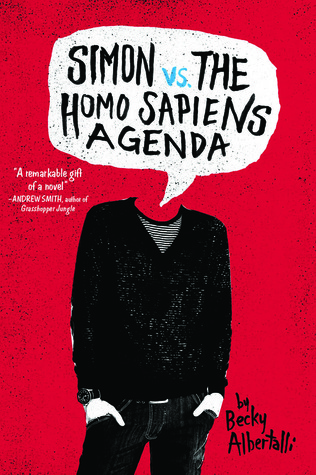
Simon vs. The Homo Sapiens Agenda


The problem with reading book summaries is that they often focus on some aspect of the plot that might seem "gimmicky" (at least to this reader), and that can put me off.  Neither the title nor the "hook" of this book encouraged me to read it, despite the almost universal acclaim.  If you have been similarly disinclined, let me reassure you:  this book is a must-read for fans of contemporary Young Adult literature.  It is frank, funny, warm and has such a great voice.  Author Becky Albertalli is a clinical psychologist who works with teenagers, and her love and respect for her subject shines through every aspect of this book.

The plot kicks off with 16 year-old Simon Spier engaging in a highly secretive email exchange with another boy in his school.  Through the freedom of an anonymous email account, Simon (aka Jacques) is exploring the possibility that he might be, probably is in fact, gay.  Neither Simon nor his confidante "Blue" is ready to come out, even to each other, but their email confidences gradually deepen into a relationship which is important to both of them.  So here's the rub, and nub of the plot: Simon gets busted by Martin, an acquaintance in his drama group.  Martin proposes a deal (ie, blackmail):  He will keep Simon's secret, as long as Simon champions his courtship of Abby (an alpha female who happens to be one of Simon's best friends).  Although Simon's "coming out" is the central drama of the plot-line, the book is exceptionally strong on friendship.  For most people in this age group, friendships are far more important than romantic relationships -- and this is underscored over and over again through Simon's bumpy progress towards romantic happiness.

There were was so much to admire in this book, but I particularly appreciated the active presence of loving parents.  There are so many examples of dysfunctional or completely absent parents in YA literature; sadly, it is almost a novelty to find a positive (yet realistically so) parent-child relationship. Probably the worst thing about Simon's father, in particular, is that he makes the common mistake of being tragically "hip".  Not only does this result in tasteless jokes, but it also defies that generational law:  Thou Shalt Not be Hipper Than Thy Teenager.  Even teenagers from close families need their emotional space, and I haven't met a teenager yet who wants to discuss his or her sex life with parents.  One of the funniest lines in the book, at least for me, was Simon's rueful acknowledgement that his parents' eager desire to "share" with their children could be "more exhausting than keeping a blog."

We still live in a world where most parents, no matter how liberal and loving, will have a bit of an emotional adjustment period at the revelation that their child is gay -- if only because of worry for the greater difficulties that their child may face.  One of the things that Albertalli gets exactly right is that she creates something close to a best-case scenario -- good friends, supportive parents -- and then she acknowledges that "coming out" is still a difficult thing.  The truly genius thing about this book, though, is that it is so much more than a coming out story of one boy.  Simon knows his parents will accept his sexuality with grace; the thing that really worries him is the scrutiny.  Adolescence is a time of great flux -- of figuring out how you are -- and that can be both tiring and painful.  As Simon puts it:

All I ever do is come out.  I try not to change, but I keep changing in all these tiny ways.  I get a girlfriend.  I have a beer.  And every freaking time, I have to introduce myself to the universe all over again. 


Click icon for more
book review blogs
@Barrie Summy


This book appears on TRAC's First Love reading list.  Please visit the TRAC website for more details about the Teen Reading Action Campaign.

Wednesday, 3 February 2016

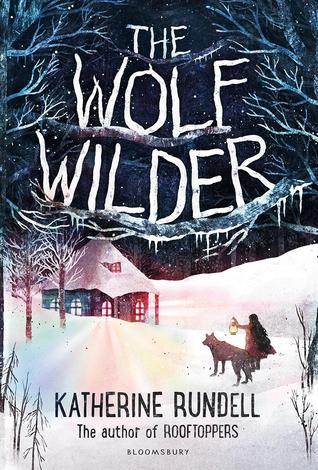
The Wolf Wilder


Thoroughly immersed in the BBC's sumptuous production of War and Peace, I have been in the mood for all things Russian in the past few weeks.  In my corner of England, we've yet to see snow -- but there is snow aplenty in Katherine Rundell's The Wolf Wilder.  The main character, feral wolf-girl Feo, plays with snow, hides in it, feeds it to wolf cubs and uses it as a weapon.

This is Russian winter set approximately 100 years after Leo Tolstoy's epic novel.  There are rumblings of revolution -- an ineffectual Tsar, decadent aristocrats and the cruel General Rakov who abuses his absolute power and serves as the novel's villain.  

Unlike War and Peace, this fairy-tale-like story takes place in the wild and on the fringes.  The three main characters -- Feo, Ilya and Alexei -- are a wolf wilder barely out of childhood (Feo), a young soldier who wants to be a dancer (Ilya) and a budding revolutionary (Alexei) who wants retribution for his burnt-out village.  Not forgetting the wolves, of course.  The wolves, like the children, still have enough wildness in them to resist brutal attempts at taming.

In this world, St. Petersburg aristocrats keep wolves as status-symbol house pets.  But wolves can only be tamed to a point.  The wolves are overfed and indulged until the day they rebel against their capricious masters and revert to their -- well, wolfish -- instincts.  This is where Feo and her fierce mother Marina come in.  They teach the wolves to be wild again; they return them to their rightful home and proud, fierce natures.  While the adults in this world are terrified of harsh retribution -- with the exception of Marina, who has been jailed for her defiance -- the children are still wild and bold enough enough to fight against unfairness.  Yes, the children show the adults the way . . . a time-honoured theme in children's literature.

Although there are hints of history, the book is more of an old-fashioned adventure story.  Feo goes on a journey, which is both literal and figurative, making friends along the way.  It ends with a triumphant storming of the city; although, inevitably, there are some sad losses along the way. Although it is probably a middle-grade book, according to the rules of judging these things, it has the ability to appeal to all ages.  As C.S. Lewis so wisely said, "A children's story that can only be enjoyed by children is not a good children's story in the slightest." 

If you care about the look and feel of books, do buy this one in the beautiful hard-cover edition. The combination of Rundell's spare, elegant words and Gelrev Ongbico's delicate, smoky illustrations is truly transporting.  The mood is Russian winter, folklore and fairy tales and wood-cuts, in all of its dangerous beauty.

For more information about the illustrator, and a peek at the gorgeous illustrations, I recommend this fabulous post at tygertale. 


Click icon for more
book review blogs
@Barrie Summy

Wednesday, 30 December 2015

Top Ten Reads from 2015

As we turn the final chapter of 2015, "best of" lists are popping up everywhere.
Like most avid readers, I am a sucker for recommendations from people who read a lot and really love books.

While reading tastes are highly individual, there is always some consensus:  certain books just have a can't-put-them-down quality about them.  Perhaps even more importantly, some books stick with you -- usually because they touch your emotions.  This year I read well over 100 Young Adult books -- a lot, but certainly nothing like a comprehensive sample.   There were definitely some notable trends, particularly in realistic fiction.  Mental health and sexuality/sexual identity were important issues in many high-profile books -- including the top four books on this list (three of them UKYA).

As the year ends, in a rush of activity and socializing, I am already longing for quiet January days. The truth is, I am always looking for my next best read . . .


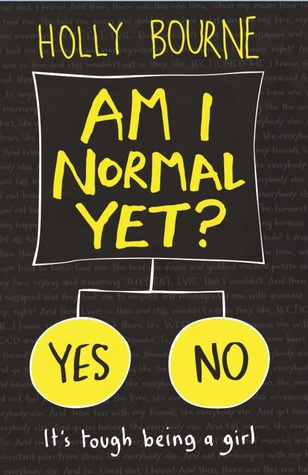
Am I Normal Yet?, by Holly Bourne

Evie desperately wants a fresh start.  After being hospitalized for a mental breakdown, caused by out-of-control OCD, Evie has got back on track.  Enrolled in Sixth Form College, she has new friends and even more than one potential love interest.  But being let down by one guy after another is starting to derail Evie’s recovery.  Even when her friends rally to her cause, Evie feels that her facade of ‘normal’ is showing some serious cracks.  Funny, frank and proudly feminist:  this book is a fresh, authentic voice.  (UKYA.  Contains some references to sexuality and drugs/alcohol.)


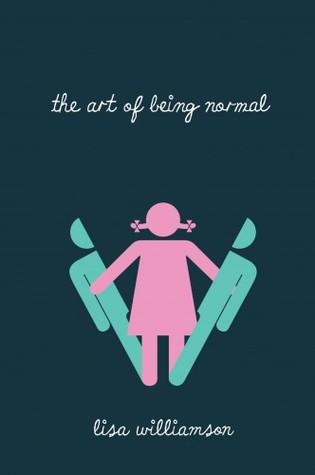
The Art of Being Normal, by Lisa Williamson

David’s parents assume he is gay, but the truth is more complicated.  Although he has supportive friends, he still feels completely isolated by his painful reality:  his body doesn’t match his sense of himself.    Leo Denton is new to David’s school, but he brings a tough reputation with him.  When Leo defends David against the usual bullies, the two become allies – and then friends.     This brave, emotionally involving book explores transgender issues through believably complex characters.
(UKYA)


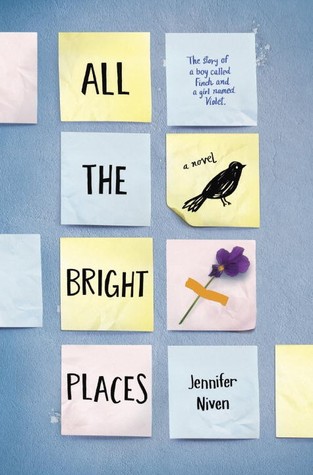
All the Bright Places, by Jennifer Niven

When Fitch and Violet meet on the ledge of the bell tower, it is debatable as to who is saving whom.  Violet hasn’t recovered from her sister’s death, while Fitch – the class “freak” – struggles with highs and lows that he cannot control.  Tentative friendship turns into romance, but can there be a happy ending for this unlikely pair?  Moving and memorable:  this relationship novel  will really engage your emotions.  (Contains some strong language, sexual scenes and emotionally disturbing material.)


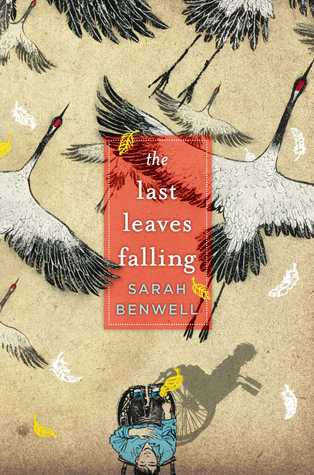
The Last Leaves Falling, Sarah Benwell

For most 17 year-olds, death is an abstract concept; for Abe Sora, it is a grim reality.  After being diagnosed with ALS, Abe is trapped in his failing body and isolated in his bedroom.  Longing for anonymity, he searches for connections in online chat rooms.  Unexpectedly, he makes real friends there – and not just virtual ones.  With the help of his friends, Abe figures out how to meet death on his own terms.  Thoughtful and funny, this book takes a morbid subject and turns it into a truly life-enhancing story.  (UKYA)


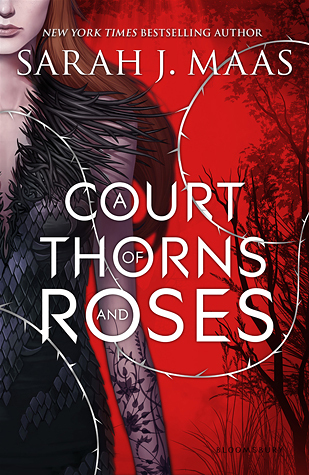
A Court of Thorns and Roses, by Sarah J. Maas

Deep in the winter woods, 19 year-old Feyre kills a wolf and unknowingly triggers a dark curse.  Taken hostage by the fearsome Tamlin, Feyre is trapped in a luxurious but confining world.  Despite their bad beginning, Feyre’s sympathy for her captor grows – until she is willing to risk her own life to save him.  The compelling and romantic fantasy sets the Beauty and the Beast motif in a complex faerie realm.  This is grown-up YA for fantasy lovers.  (Contains violence and sexuality.)


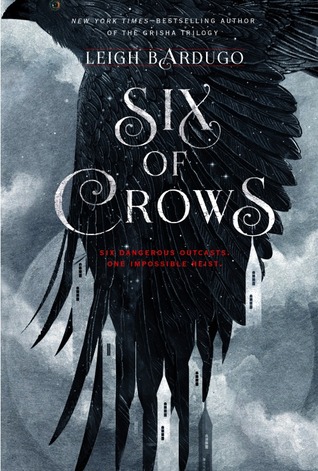
Six of Crows, by Leigh Bardugo

In the mean streets of Ketterdam, six unlikely allies will be recruited to break into the unbreakable fortress of the Ice Court.  Their mission:  to liberate a scientist/inventor who holds the secret to manipulating Grisha magic.  Their price:  enough money to escape from their dangerous, dead-end lives.  This fast-paced heist story is the first in a new series by Bardugo . . . intricately plotted, with richly shaded characters.


Crow Moon, by Anna McKerrow

As the world runs out of fossil fuel, environmentally minded people have established a “Greenworld” in Devon and Cornwall and returned to the old ways of living.  Powerful witches, like Danny’s mother, work to keep out the unscrupulous gangs who would exploit the earth’s natural energy.  Danny is more interested in girls than magic, but he is drawn into the battle between the Greenworld and the gangs.  Although Danny doesn’t understand his own magic, forces on both sides need it – and will stop at nothing to get it.  This book excels at both plot and characterisation, and gives a topical post-apocalyptic spin on a more traditional fantasy landscape.  (UKYA)


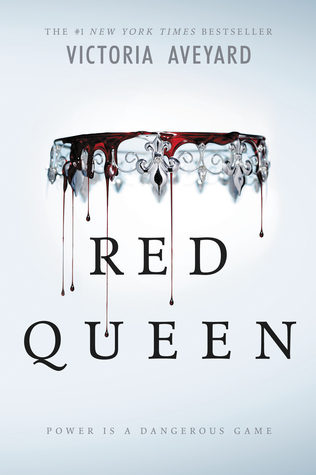
Red Queen, by Victoria Aveyard

In the Kingdom of Norta, the Silvers are born to rule while the Reds are born to serve.  Any Red who cannot find a job will become cannon fodder in the long-running war.  Mare is a lowly Red, a former pick-pocket turned serving girl; but when it is discovered that she possesses an unusual power, the Royal Court decides to make different use of her.  Mare is transformed into a long-lost Silver noble and engaged to Maven, the younger prince.  It is a dangerous game of subterfuge, made even riskier when a Red terrorist operative enlists Mare’s help.   Twisty and unexpected, this best-selling fantasy novel will fill The Hunger Games gap.


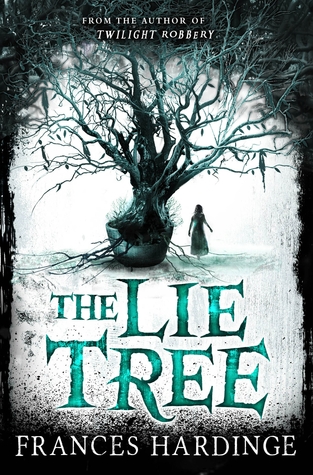
The Lie Tree, by Frances Hardinge

In this historical fantasy, a young girl refuses to conform to the Victorian belief system that females should be ‘good’ but not clever.  Faith’s father is a renowned natural scientist whose reputation has been tainted by scandal.  When he dies under mysterious circumstances, on the remote island of Vane, Faith is determined to prove that his death was not a suicide – but rather a murder.   Applying logic, observation and misdirection, Faith is determined to salvage her father’s reputation.  This beautifully written book is a suspenseful murder mystery, but also a thoughtful analysis of women’s roles in Victorian England.


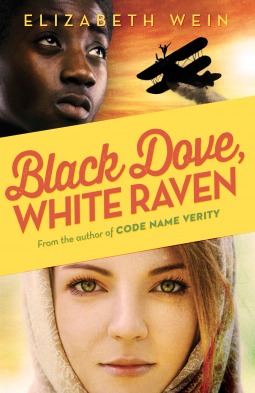
Black Dove, White Raven, by Elizabeth Wein

Best friends Delia (Black Dove) and Rhoda (White Raven) are stunt flyers during the 1920s, but the ongoing racism in the southern United States inspires a dream:  to emigrate to Ethiopia, the one African country which has never been colonized.  After a freak accident kills Delia, Rhoda is determined to keep her partner’s dream of equality and freedom alive.  Despite the difficulties, Rhoda transplants Delia’s son Teo and her own daughter Emilia to a coffee collective in Ethiopia.  But as Teo and Emilia come of age, Mussolini’s Italian army invades Ethiopia and their family is drawn into the tragic conflict.  This fascinating story highlights a cultural and historical setting that rarely gets attention in YA literature.

Still on my TBR pile:
Other YA books which have been getting lots of positive buzz include Asking for It, by Louise O’Neill; The Rest of Us Just Live Here, by Patrick Ness; Finding Audrey, by Sophie Kinsella; An Ember in the Ashes, by Sabaa Tahir; Simon vs. The Homo Sapiens Agenda, by Becky Albertalli; Winter, by Marissa Meyer; One, by Sarah Crossan; and the list just goes on!  

Happy reading in 2016. . .

For other reading recommendations and themed book lists, visit TRAC's website. 

Monday, 30 November 2015

A Brighter Fear


There comes a terrible moment to many souls when the great movements of the world, the larger destinies of mankind, which have lain aloof in newspapers and other neglected reading, enter like an earthquake into their own lives . . .
George Eliot, Daniel Deronda 

What is it like to live in a war zone?
Would you save yourself, if you had the chance, even if it meant abandoning your loved ones?
Would you leave your country, maybe forever, or would you take your chances and stay?

In A Brighter Fear, UKYA author Kerry Drewery imagines civilian life in a war-zone from the point-of-view of 16 year-old Lina.  As with most teenagers, Lina's life before the war is dominated by school.  As the child of educated, professional parents, Lina has devoted herself to her studies, has taken pride in her city's history as a seat of learning, and has dreamed of becoming an architect.  But when U.S. forces invade Baghdad in the spring of 2003, Lina's life becomes so narrow that it finally shrinks to the form of day-today survival.  The former realities of school, parents and friends cease to exist.

Drewery vividly describes the fear of the unknown, as the city prepares for invasion, and then the chaos and destruction which follows.  Wreckage is everywhere, as are dead bodies.  Soldiers stalk the streets in their tanks, and bombs are an ever-present threat.  Utilities are unreliable or nonexistent, as is news.  No one's home is safe. The future does not feel like something anyone can plan for or rely on anymore.

Although Drewery's story does not glorify Saddam Hussein's brutal reign -- indeed there is a subplot involving Lina's mother, who was imprisoned for refusing to cooperate with Hussein's government -- it is also clear that war always brings unintended consequences.  The Americans may have intended to bring democracy and freedom to Iraq, but in reality the chaos and confusion allows sectarian violence to flourish.  Although Lina's family are Christian, she must adopt the concealing clothing and hijab of Muslims in order to protect herself from the vigilante justice of fundamentalists. And even when her family cooperates with the American soldiers, there is a high price for that cooperation.  When Lina is presented with the chance to escape Baghdad, she has to weigh the complete unknown against the present risk -- both to herself, and someone she loves dearly.

As the debate about Syrian refugees takes place in the media, between governments, and at dinner tables, it is really worth trying to imagine war-torn lives compassionately.  Hopefully, most of us will never experience life in a war-zone, but even if we have the good fortune to escape that "earthquake" in our lives there is a chance that we may come into contact with those who haven't been so lucky.  It is nearly impossible to imagine pain when we have not experienced it for ourselves, but a powerful story may come closer than anything else to bridging that gap.  A Brighter Fear is painful to read, but only because it illuminates the kind of realities that are far more painful to experience.


A Brighter Fear and other war novels can be found at "War and Remembrance" at TRAC.
For more recommendations on books which feature refugees please read this post from the Sarah Laurence blog.

Wednesday, 11 November 2015

Poppy


In Flanders field the poppies blow
Between the crosses, row on row,
That mark our place; and in the sky
The larks, still bravely singing, fly
Scarce heard amid the guns below 

John McCrae 'In Flanders Fields', Essex Farm 1915


For several weeks before Armistace Day, the cheerful red poppies associated with the Royal British Legion's annual Poppy Appeal are omnipresent in England.  Every schoolchild knows that they are associated with World War I:  with 'remembrance', with honouring the dead, with supporting the armed forces.  The two minute silence is honoured all over the country, but I wonder how many young people are focusing their thoughts on sacrifices made so long ago?  For those who do not have a specific family member to remember, is there another way to make a mental and emotional connection with 'historical' events?  I would argue 'yes'.  A well-told story has the ability to powerfully concentrate the mind, and there are several recently published UKYA novels that truly do bring World War I back to life again. 

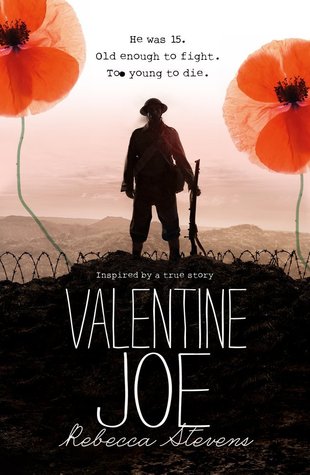
Rebecca Stevens published Valentine Joe in 2014, the centenary of the beginning of the war. Valentine Joe Strudwick was a real person; he died at Ypres at the age of 15, and was buried in the Essex Farm cemetery immortalized by John McCrae's famous poem.  In this unusual novel, a contemporary storyline is skilfully woven together with the historical one.  Rose and her Grandad are visiting Essex Farm when she spots Valentine Joe's gravestone.  Rose is still in mourning for her own father, who has recently died.  Through the device of a scrappy stray dog called Tommy, Rose manages to time-travel back to the battleground of Ypres and meet Joe.  Rose's state of mind is so attuned to grief and loss that she is able to connect directly with Joe, and in a very sweet and subtle way they each manage to heal something in the other.  History really is brought back to life in this book. 

Mary Hooper, a name particularly associated with historical fiction for young adults, has published two novels in the last 18 months which view the 'War to End All Wars' from the perspective of Poppy Pearson, a young VAD nurse.  At the beginning of the war, Poppy is working in 'service' as a parlourmaid for the de Vere family.  Poppy is intelligent and able, but social class and lack of money -- her mother has been widowed with four children -- have narrowed her options.  The war brought many unexpected social changes, particularly for women, and Poppy is able to develop useful skills, travel and mix with other social classes precisely because qualified nurses were in such demand.   Initially, Poppy is attached to a hospital in Southampton; later, in Poppy in the Field, she nurses wounded and dying men in France.  The storyline touches on how the brutality of trench warfare forced improvements and innovations in medical care -- everything from the mental illness described as 'shell shock' to experimentation in plastic surgery and prosthetics.   Throughout both novels, the broken bodies and spirits that Poppy tends to are made very real.  There is one particular scene in which Poppy has to clean up a soldier nicknamed 'Tibs' who has came straight from the battlefield. The description of Poppy cutting off Tibs' boots, and discovering an advanced case of trench foot, is not one that I will soon forget.  But having said that, the narration is far from melodramatic.  The novel has many poignant moments; but considering the source material, how could it be otherwise?
World War I changed the world in many ways, but one enduring legacy has been a change in the way war itself is viewed. 


Wednesday, 4 November 2015

The Montmaray Journals


The Montmaray Journals:
A Brief History of Montmaray (Book I)
The FitzOsbornes in Exile (Book II)
The FitzOsbornes at War (Book III)

When I was researching war novels targeted at the Young Adult audience, I came across Australian author Michelle Cooper's The Montmaray Journals -- and I suspected, quite correctly, that they would be just the sort of thing I like.  A tumultuous, dramatic time period, an eccentric family, strong female characters, action, adventure and political intrigue:  yes, please.

World War II provides an endlessly fascinating canvas for fiction, and this trilogy of novels set during the period of 1936-1944 covers far more ground than most.  This is not just a portrait; it's a vast landscape, but always with Sophia (the narrator) and her family in the foreground. If your historical knowledge is a bit sketchy, or if you were taught that World War II began with the bombing of Pearl Harbor, you will be particularly (and delightfully) enlightened.  

The first novel begins on a tiny island called Montmaray in the Bay of Biscay.  The Montmaravian Royal Family has been reduced to King John (who has never recovered from losing his entire regiment to World War I), his daughter Veronica (passionate about history and politics) and Toby, Sophia and Henry (Henrietta) -- their orphaned cousins.  Rebecca, the housekeeper, and her son Simon are also central to the plot.  The author has an ingenious way of involving this miniature and seemingly irrelevant kingdom in the churning political sea of the mid 1930s.  The Spanish Civil War, Nazi Germany's Ahnenerbe research and the League of Nations are all plot-points involving Mortmaray and its young royal family -- whilst also giving rich historical context to the events leading up to World War II.   The best bit is that Cooper is never guilty of info-dumping.  Instead, she sprinkles and folds her historical facts into a cracking good story.

There has been a strong trend for blending "historical fact and imaginative fiction" (as Cooper describes it in her Author's Note), and I am all for it.  Elizabeth Wein's brilliant Code Name Verity and Rose Under Fire used the same strategy and they are amongst my favourite war novels of all time.  Like The Montmaray Journals, they are epistolary novels:  told through a series of diary entries, they create both an intimate, confiding tone and a particularly suspenseful way of shaping a story.  The other obvious similarity between these novels is the way that young women are at the forefront of the action -- not just because they narrate the story, but because they are actively engaged in their own "war" stories.  When I was an adolescent, we only had Anne Frank's The Diary of a Young Girl -- also a wonderful book, but undeniably a more passive point of view.

Another delight of this trilogy is the way that the author references literature and poetry, often symbolically. Sophia, the narrator the story, is a passionate reader and story-teller.  Throughout the trilogy, Sophia has a book to hand.  At the beginning, when she is far more sheltered and romantically inclined, she is reading Pride and Prejudice.  As Great Britain edges into the war, she is reading Virginia Woolf's Three Guineas.  Unless you are completely unfamiliar with Dodie Smith's classic novel, it would be impossible to miss the homage to I Capture the Castle.  The FitzOsbornes in Exile begins with a deliberate echo of that famous opening line:  "I write this sitting in the kitchen sink."  As the second book begins, Sophia and her family have been rescued from their crumbling castle and ensconced in their Aunt Charlotte's luxurious home in England.  "I write this sitting at an exquisite little Louis the Fifteenth secretaire in the White Drawing Room, using a gold fountain pen borrowed from the King of Montmaray and a bottle of ink provided by one of the footmen."   At the beginning of the trilogy, the parallels between Sophia and Cassandra in I Capture the Castle are so obvious that I was afraid that the novel would just be a pastiche of a beloved favourite.   Certainly the two novels share coming-of-age and first love themes, but A Brief History of Montmaray goes into quite unexpected territory -- and instead of feeling isolated in its 1930s setting, it is very much part of larger world-view.  Unlike heroines of old, Veronica and Sophia have far more to think about than the marriage plot.

In England, in November, you can see the distinctive red poppies everywhere.  We all have our own way of honouring Remembrance Day, but my recommendation is to immerse yourself in a good war novel -- or three of them, as is the case with The Montmaray Journals.


Click icon for more
book review blogs
@Barrie Summy